Plooi · Own product
A chat forgets.
A canvas remembers.
Plooi turns design methods into cards on a shared canvas. AI does the legwork; the work stays readable and stays yours.
- Role
- Product, design and development
- Timeframe
- 2025–ongoing
- Context
- Own product · method-based AI workflows with human control
- Status
- Functional alpha · plooi.ai ↗
Different work. Same chat box.
In my day-to-day design work I had become a human copy-and-paste machine between AI chats and design tools. A persona, a journey map and an interview guide all came back as the same block of text. It raised a bigger question: how do designers want to work when AI is part of the team? I came up with Plooi, designed its methods and interface, and develop it myself with AI coding agents.
The format stays the same.
A new task becomes another message. The result is still a block of text in the thread.
The workspace changes with the task.
A valid ticket ready when connectivity drops.
Unclear updates during a tight transfer.
Checks the next connection before boarding.
Which information earns their trust?
Tell me about your last transfer.
OPENINGWhen did you check your ticket?
BEHAVIOURWhere did information fail you?
PROBEA persona is edited as fields. A journey is read across stages. An interview needs questions you can use in the room.
Make the method the interface.
The canvas was there in the first prototype. What took longer to find was how a method should look and behave on it.
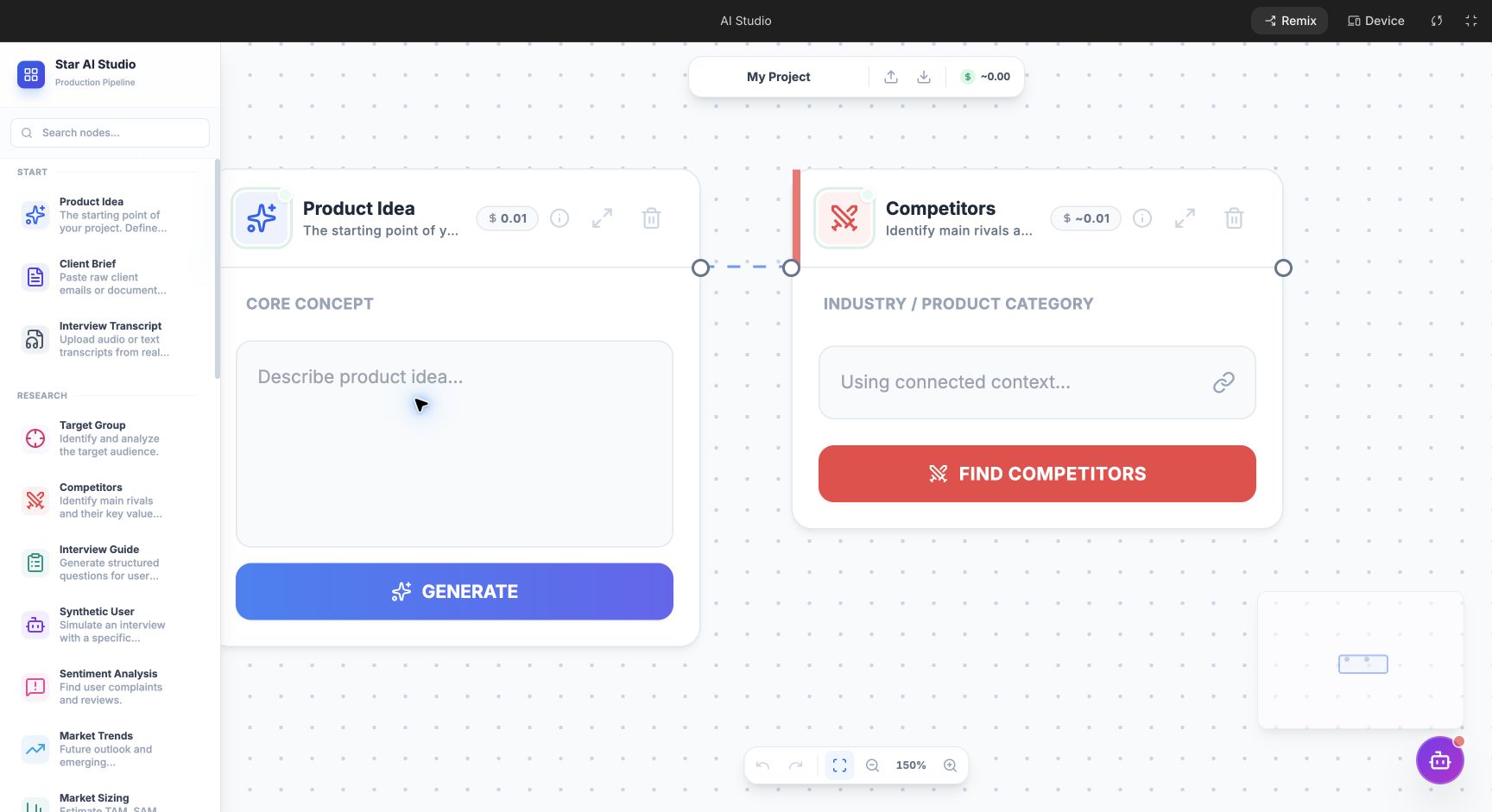
The first prototype, a canvas from day one. · Actual interface 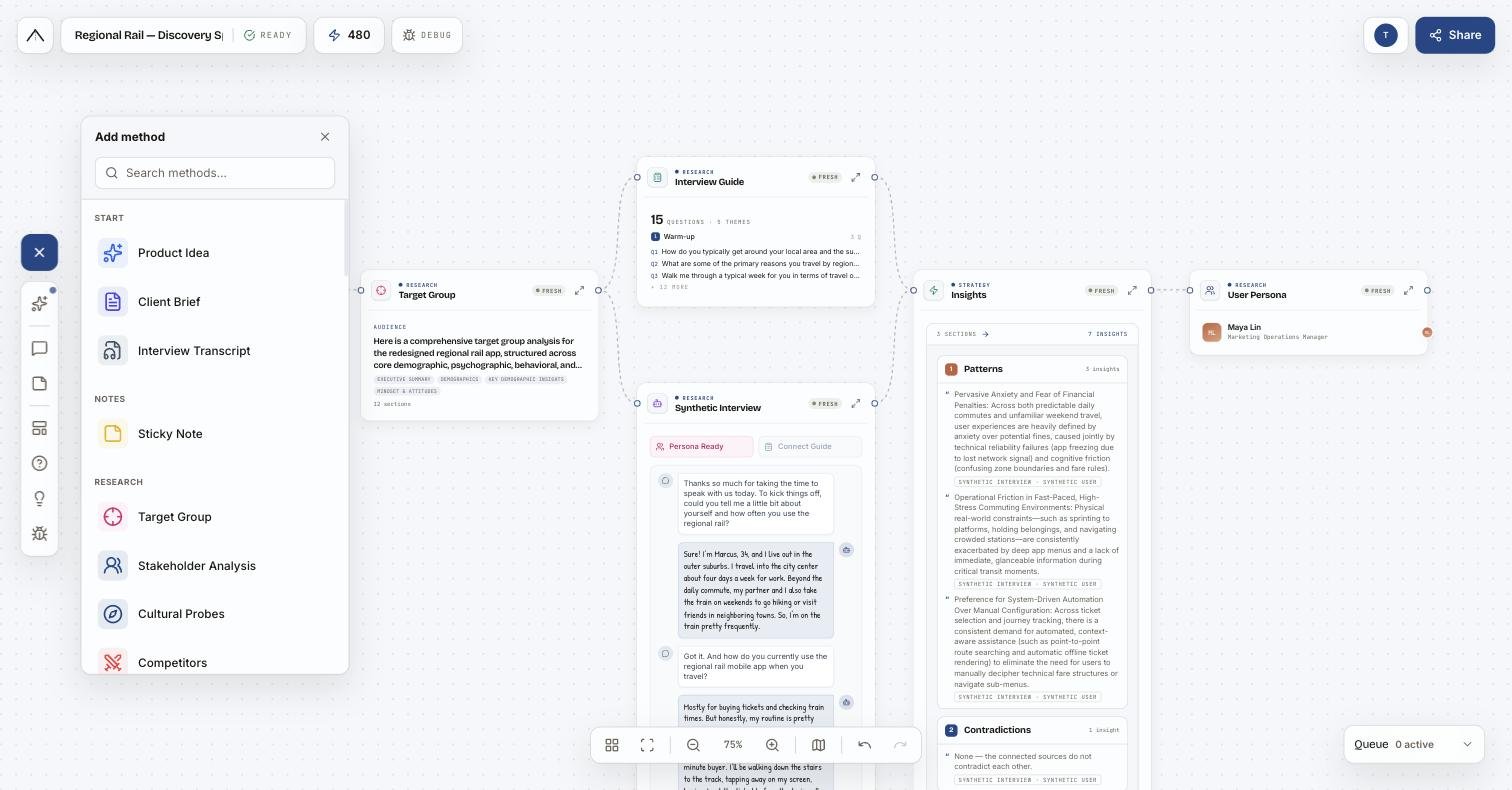
Methods as named building blocks. · Actual interface 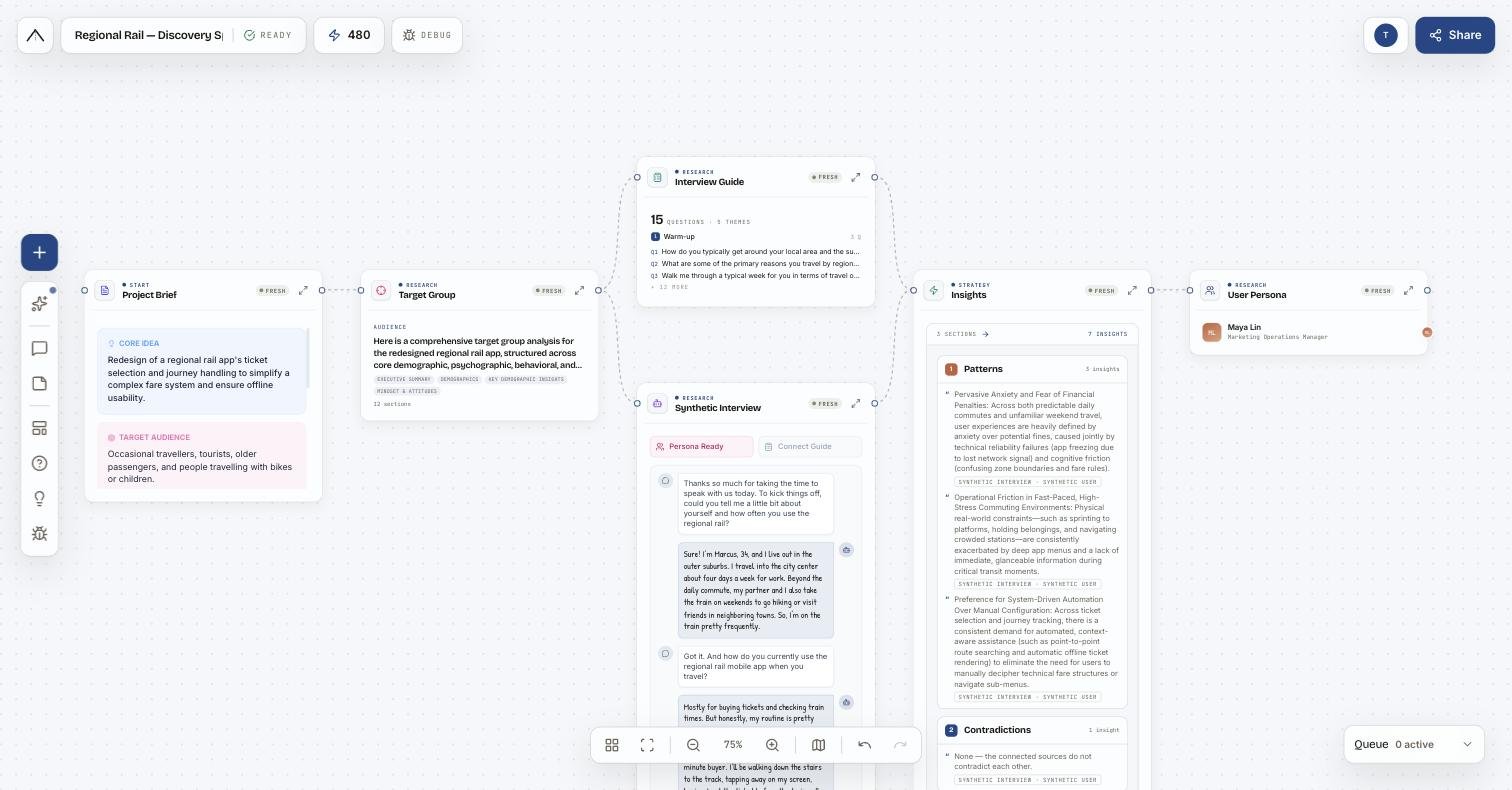
A discovery sprint on one canvas. · Actual interface
Results vanish up the thread.
Keep the whole project in view.
Every method gets the same text box.
Give each method its own shape.
Generated text looks finished.
Show where each claim comes from.
Every card shows its state, its sources and what changed.
-
A method runs as a card.
Before it runs, a card says what it is waiting for. Afterwards it shows a short preview of the result.
The card says what it needs before it asks for anything.
Actual interface, sped up
-
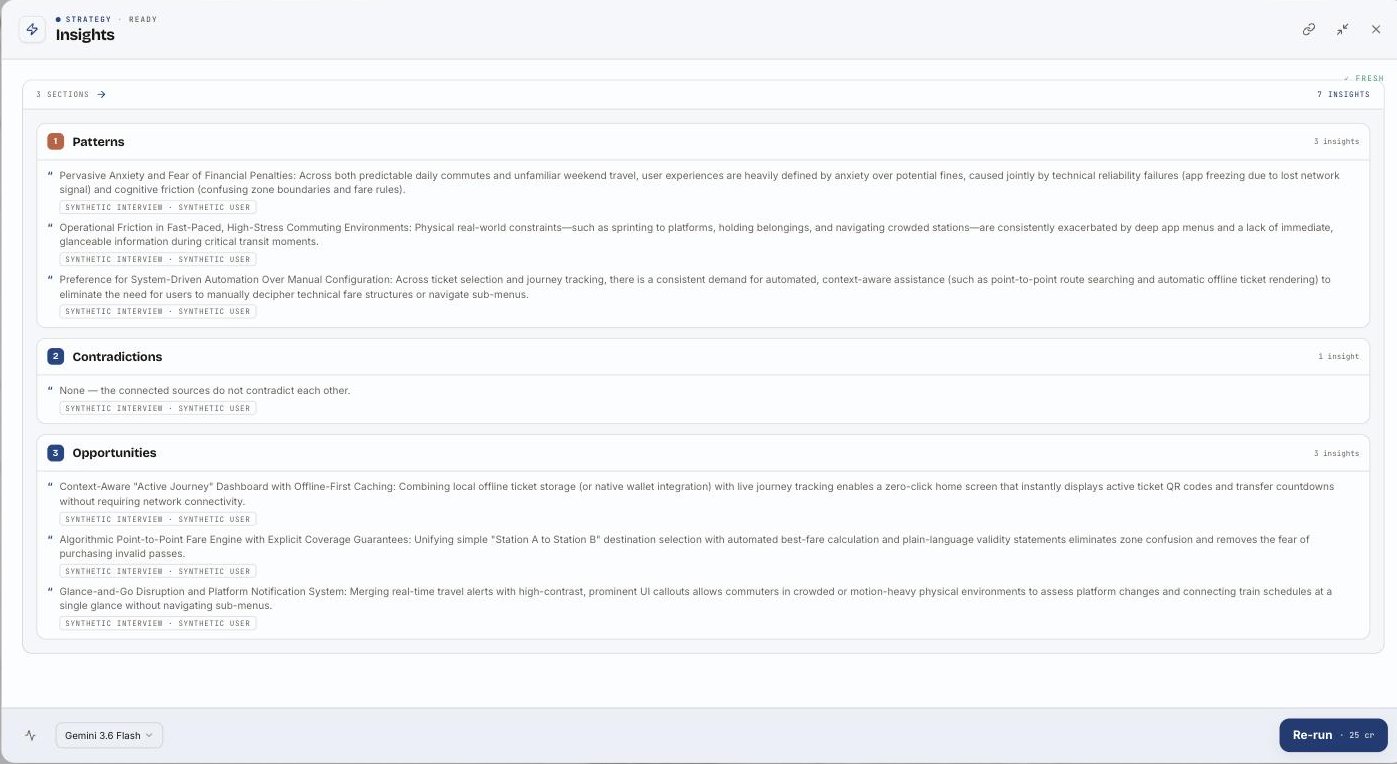
Findings keep their sources.
In Insights, every pattern, contradiction and opportunity carries a label that points to the material behind it.
A claim you can trace is a claim you can challenge.
Actual interface
-
People decide what stays.
Lock the rows that matter. Before a re-run the card says how many it will keep; afterwards it shows what was kept, added and replaced.
AI writes the first pass. People decide what survives.
Actual interface, sped up
-
Change shows downstream.
Change the idea and every card after it turns Stale, its wire amber and moving. Until then, no wire moves.
Motion is saved for work that needs a second look.
Actual interface, sped up
-
Nothing runs behind your back.
A chip counts the out-of-date cards and estimates what re-running them costs. A click selects them and jumps to the first; nothing runs until someone asks.
The price is on the button before anyone presses it.
Actual interface
-
One artefact, three sizes.
The card stays small on the canvas, the work happens in a side panel, and a full view opens for reading.
The canvas stays calm while the work gets detailed.
Actual interface
A rail brief becomes a persona on one canvas.
The product works. Now it needs real users.
Functional alpha with a waitlist at plooi.ai ↗. People have offered to test it; there are no usage numbers yet.
- 01
Motion has to mean something.
Every wire used to move, so none stood out. Now only an out-of-date wire moves.
- 02
A passing test is not proof.
I now break a safeguard on purpose and check that a test notices.
- 03
Show it to people sooner.
I designed the canvas around how I work. Next time I would put a rough version in front of a few practitioners first.
- References
- Publications · Talks · Product docs ↗ · Beyond Chat, the related research →