Beyond Chat.
Make the invisible work visible.
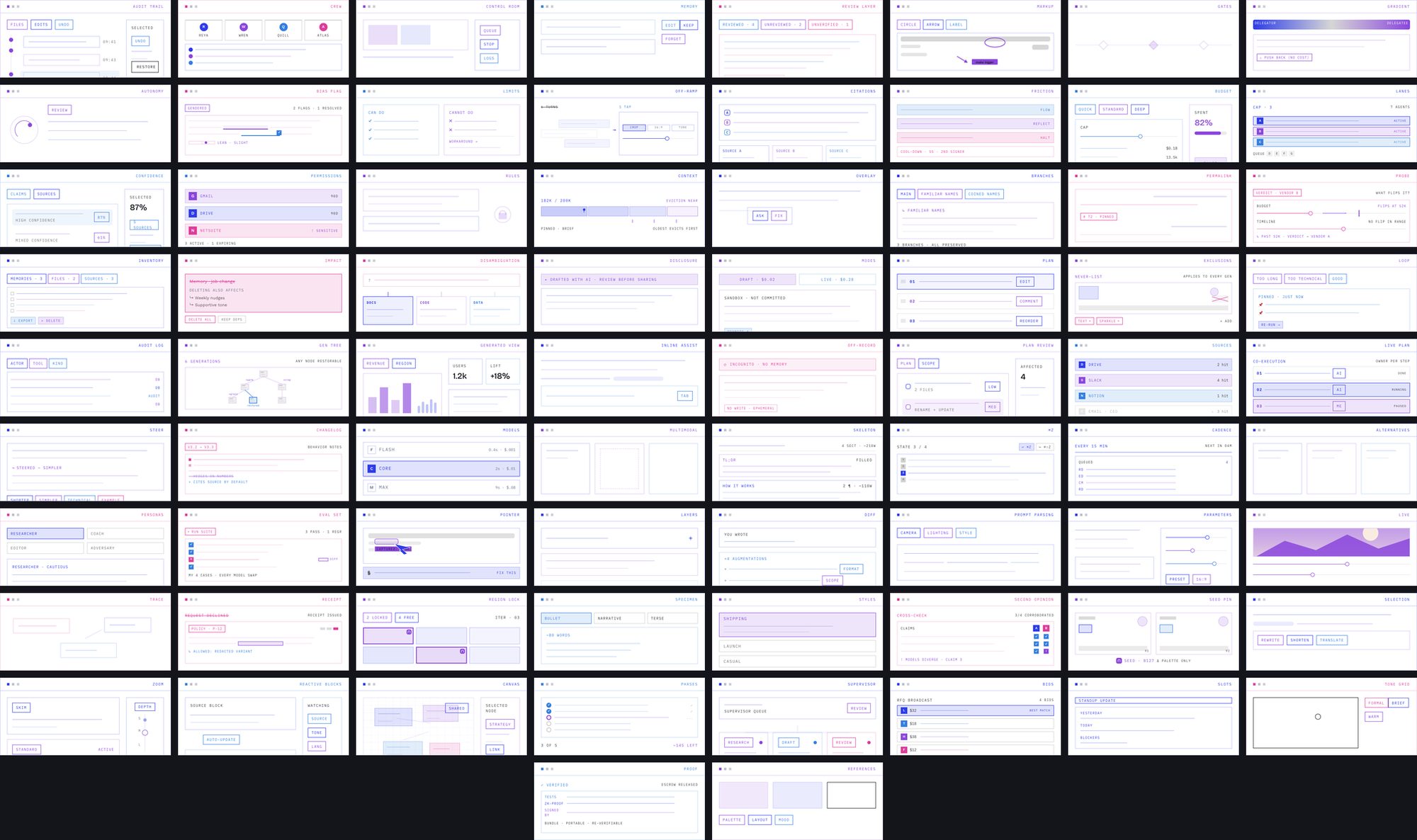
AI can write, plan and act. The interface still asks us to squeeze intent, context and control into one text box. I built a pattern library to explore what happens when that work gets its own surface.
Plan the report. Make it concise. Use these sources. Ask before publishing.
01 / Starting point
A single field is doing six jobs.
For a quick question, chat is useful. For longer work, one field has to carry intent, constraints, context, feedback, control and revision. People must remember what the system knows, what it will do next and where they can intervene.
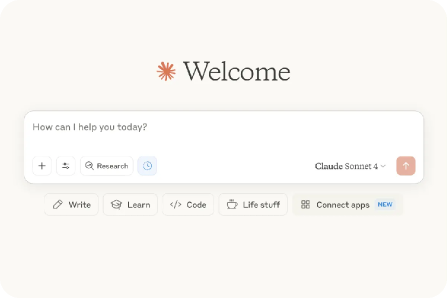
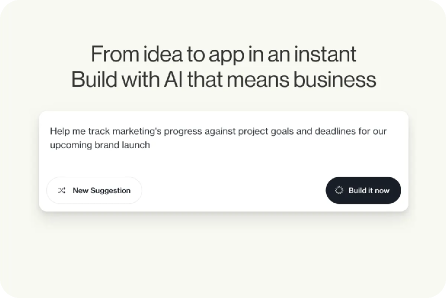
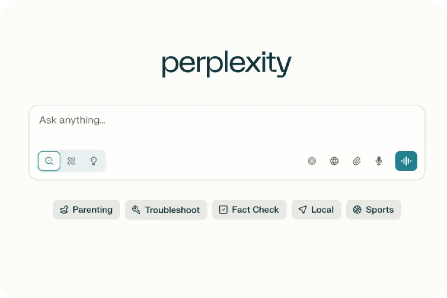
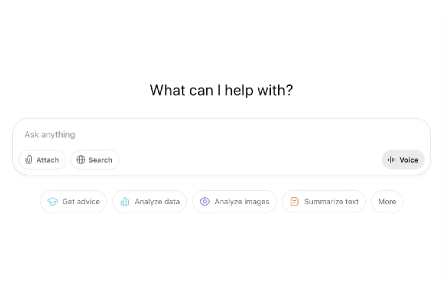
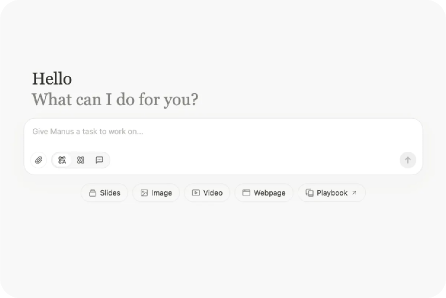
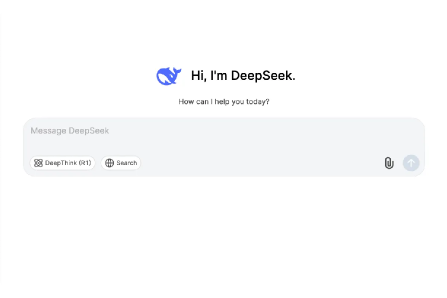
The design question became practical: which parts of AI work should be visible, steerable and checkable before they disappear into a prompt?
02 / Direct control
Change the work without rewriting the request.
The Property Panel turns part of a prompt into direct controls. This small illustration lets you change a sample response; the full prototype ↗ explores the pattern in more depth.
Draft a project update
“Summarise the status for the team. Keep the facts and dates intact.”
The project is on schedule. The team confirmed the next review for 12 October. Two decisions remain open: the final content order and the handover date.
Example source: fictional status note
03 / Framework
Control starts before the interface.
The research separates a principle from the process and the controls that carry it. That distinction matters when AI moves from answering questions to acting on someone’s behalf.
Why. Keep judgment with people.
AI can open possibilities. People should retain the authority to select, intervene and take responsibility for what is done.
How. Scaffold intent and delegation.
Structured choices and adjustable autonomy make the scope of a task clear before and during the work.
What. Make control operable.
Visible state, scoped actions and evidence give that principle a concrete place in the product.
Automation is a decision at every stage.
A trip planner can do substantial work before anything is booked. Each stage shows where the interface can prepare, reveal and hand a decision back to a person.
Easy to reviseApproval before commitment
Acquire
Gather routes and charging stops.
Analyse
Make the trade-offs legible.
Decide
Select an itinerary.
Execute
Confirm before booking.
Four properties. One overlap.
The 2025 essay asked whether an AI system could be observed, anticipated and directed. As the pattern library developed, explainability became a fourth question. DOPE is a design lens for the interface layer.
Directability
Can I steer the work? Give people a way to edit the plan, set boundaries and change course while the system is working.
Observability
Can I see what is happening? Show the current state, the sources in use and what the system has already done.
Predictability
Do I know what comes next? Preview the next action and its consequences before the system commits to it.
Explainability
Can I check the answer? Connect an output to evidence and be clear about what the explanation can and cannot establish.
04 / Pattern library
From a principle to a vocabulary of interfaces.
Beyond Chat collects interaction patterns already appearing in products alongside emerging and speculative directions. Every entry pairs a concrete idea with a prototype, its use case, risks and examples.
Each prototype sets the pattern against a baseline on the same task, usually the chat default: the demo is the comparison. Here are four of them, one for each property.
-
Editable Plan
Before the agent runs, its plan is a document you can edit. In chat the plan is negotiated in prose; here a step is removed, another moves up, and the agent runs only what was approved. Open the prototype ↗
Directability: can I steer the work?
Editable Plan in the live library, October 2026; on phones the pattern side only. · Actual interface
-
Context Gauge
Chat shows an infinite scrollback while the model sees a sliding window. The gauge shows how full the window is and which sources occupy it, warns before compaction and logs what has left. Open the prototype ↗
Observability: can I see what is happening?
Context Gauge in the live library, October 2026; on phones the pattern side only. · Actual interface
-
Intent Preview
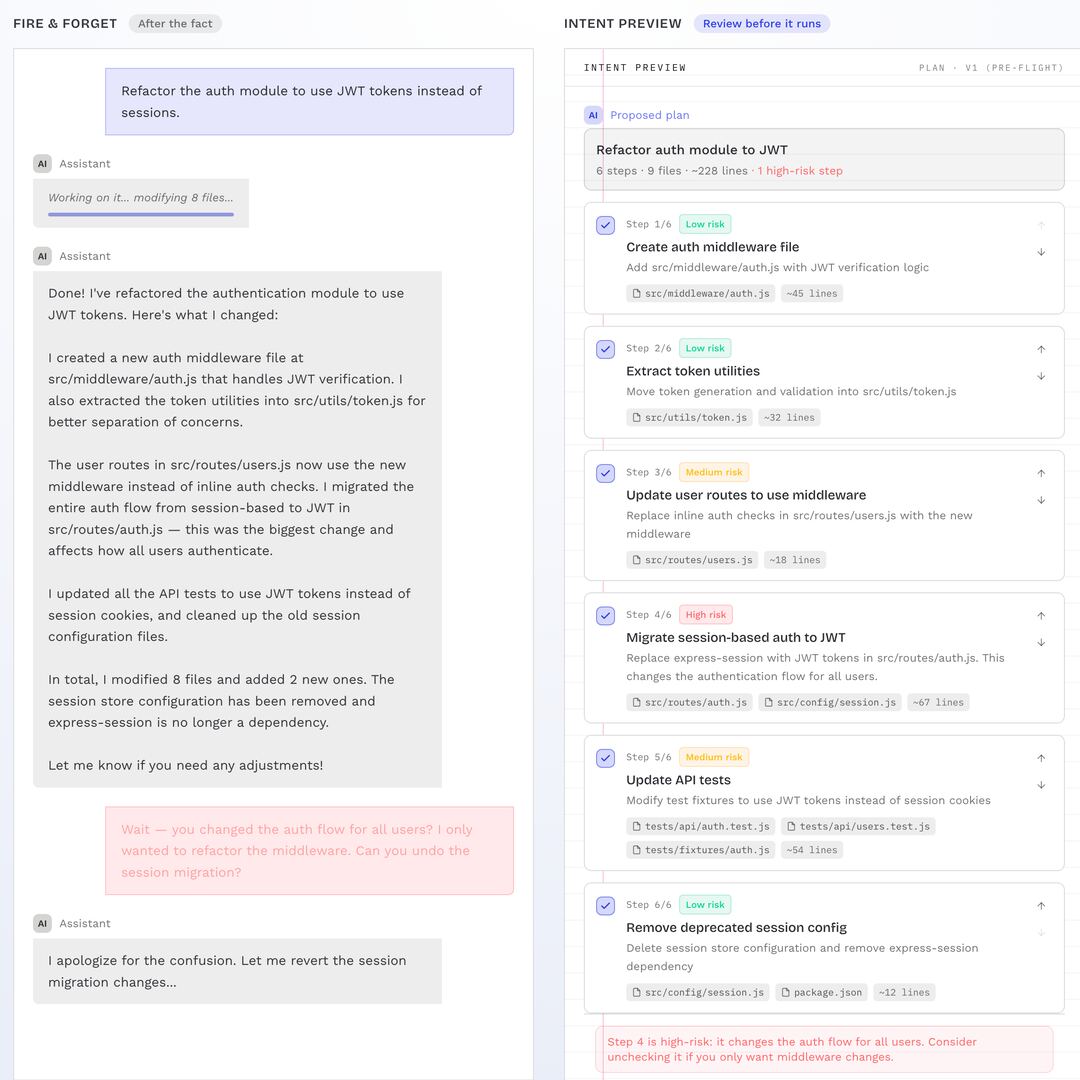
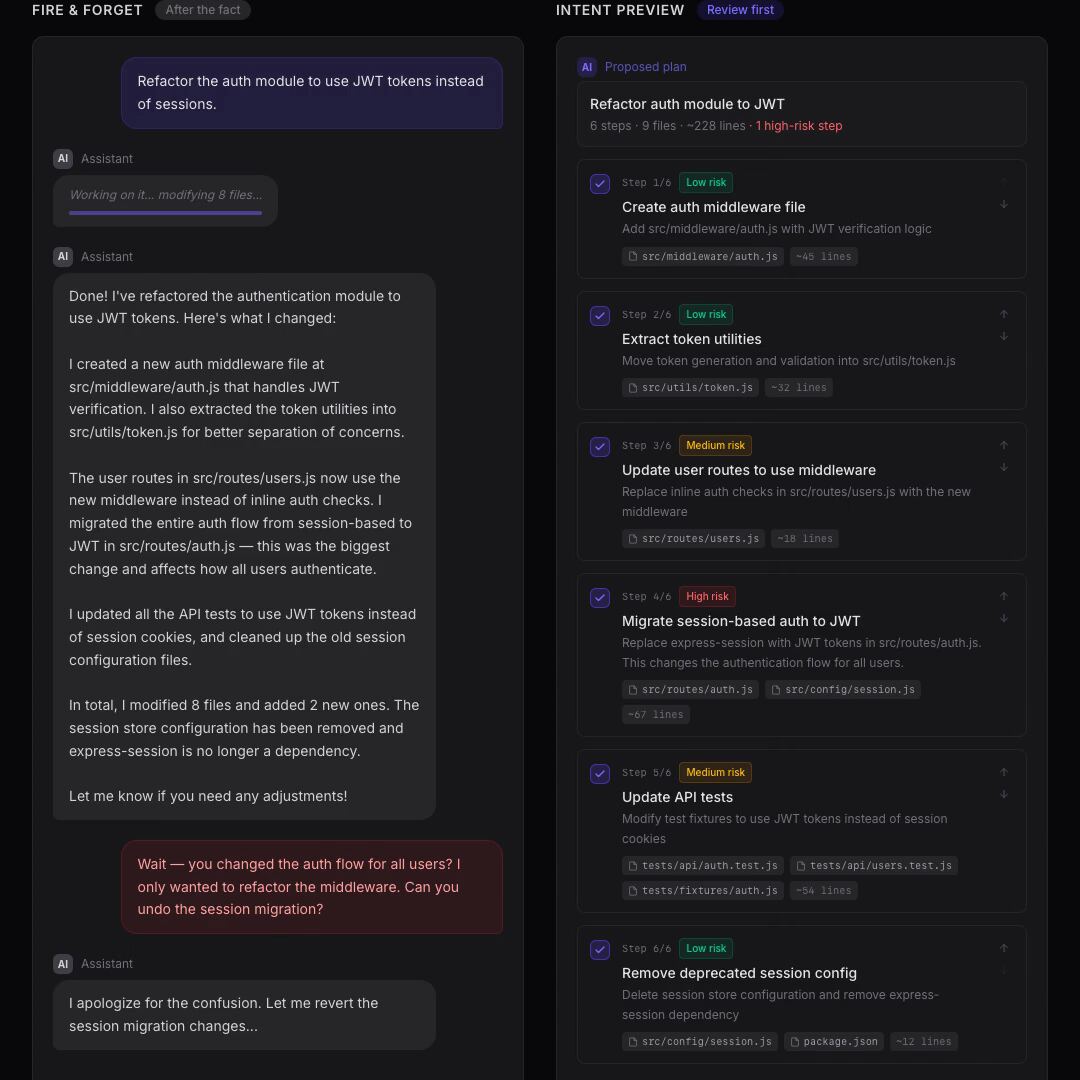
Before an agent modifies code, it shows every planned step with risk levels, affected files and scope. Here the high-risk step is skipped before a single line changes; in chat, people find out after the fact. Open the prototype ↗
Predictability: do I know what comes next?
Intent Preview in the live library, October 2026; on phones the pattern side only. · Actual interface
-
Citation Trail
Hover any sentence in an answer and the contributing sources highlight in place. Chat leaves a pile of footnotes; the trail binds each claim to where it came from. Open the prototype ↗
Explainability: can I check the answer?
Citation Trail in the live library, October 2026; on phones the pattern side only. · Actual interface
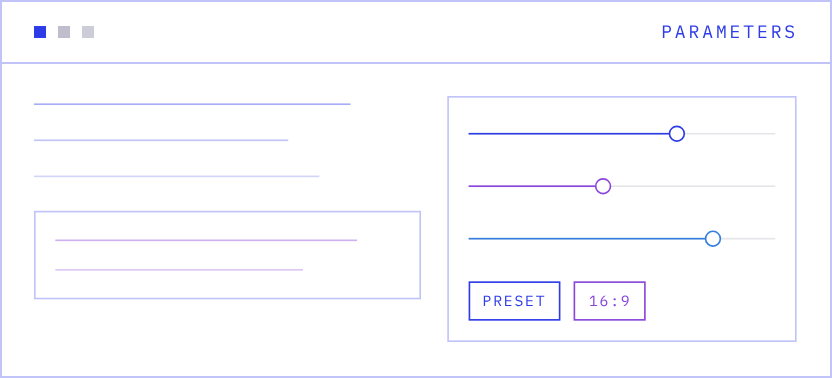
Inline & Contextual16 patterns · Property Panel ↗
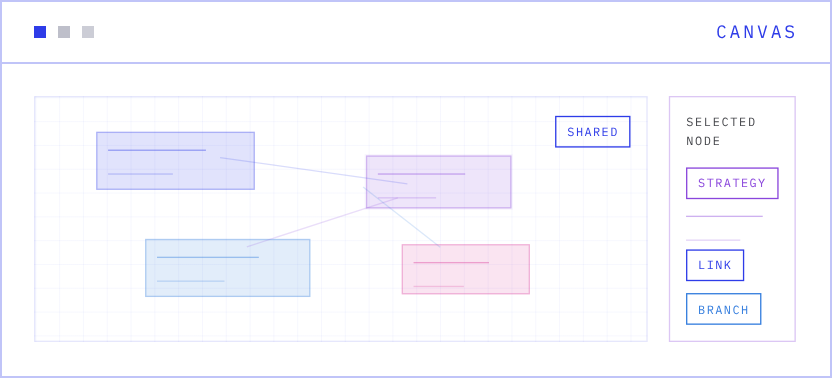
Visual & Generative14 patterns · Spatial Canvas ↗
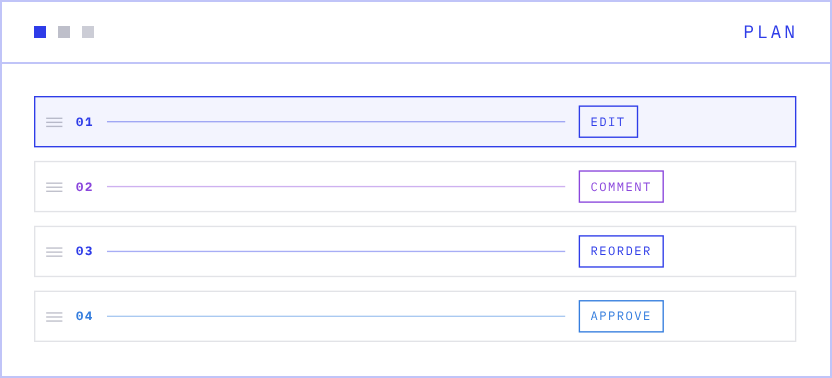
Agent Workflow20 patterns · Editable Plan ↗
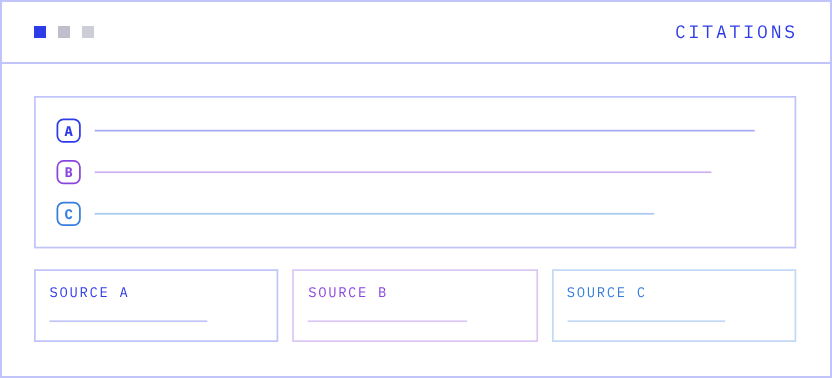
Trust & Verification17 patterns · Citation Trail ↗
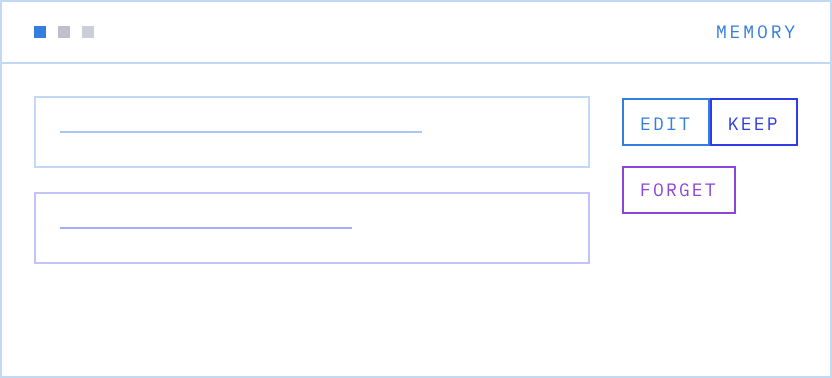
Memory, Context & Boundary13 patterns · AI Memory ↗
05 / Research & iteration
Research changed the design.
I began with writing about autonomy in design, then studied seven designers’ AI-assisted work. The public library turned those questions into prototypes. Subsequent research and product-example audits exposed claims that needed to become more precise.
Frame the question
Essays and a qualitative study with seven professional designers explored curation, autonomy and responsibility in AI-supported design.
Build the vocabulary
Five pattern families, a shared schema and interactive demos made the ideas comparable across writing, visual work, agents, trust and memory.
Audit the claims
Research reviews and a targeted audit of example rows checked whether references actually demonstrated the interaction described.
- mature
- emerging
- aspirational
Displayed trace
An account of a result that a person can inspect.
is not
Internal process
The route the model actually took.
“Reasoning Trace” needed a narrower claim.
A displayed chain of reasoning can be a useful account of a result, but it is not necessarily a faithful window into how a model arrived there. The pattern’s risk language was revised after the research review.
That correction matters: a pattern library should help teams ask better questions, including where its own examples are uncertain.
06 / What remains
A working library, and a question worth testing.
Live at beyondchat.design with 80 catalogue entries in five families, an essay and a talk. A study platform that compares chat with structured controls is built; testing is still ahead.
Reflection
I built the vocabulary before I tested it. If I started again, I would run a small comparison study alongside the first ten patterns, not after the eightieth.
- References
- Visit Beyond Chat ↗ · Read the essay → · See the talk →