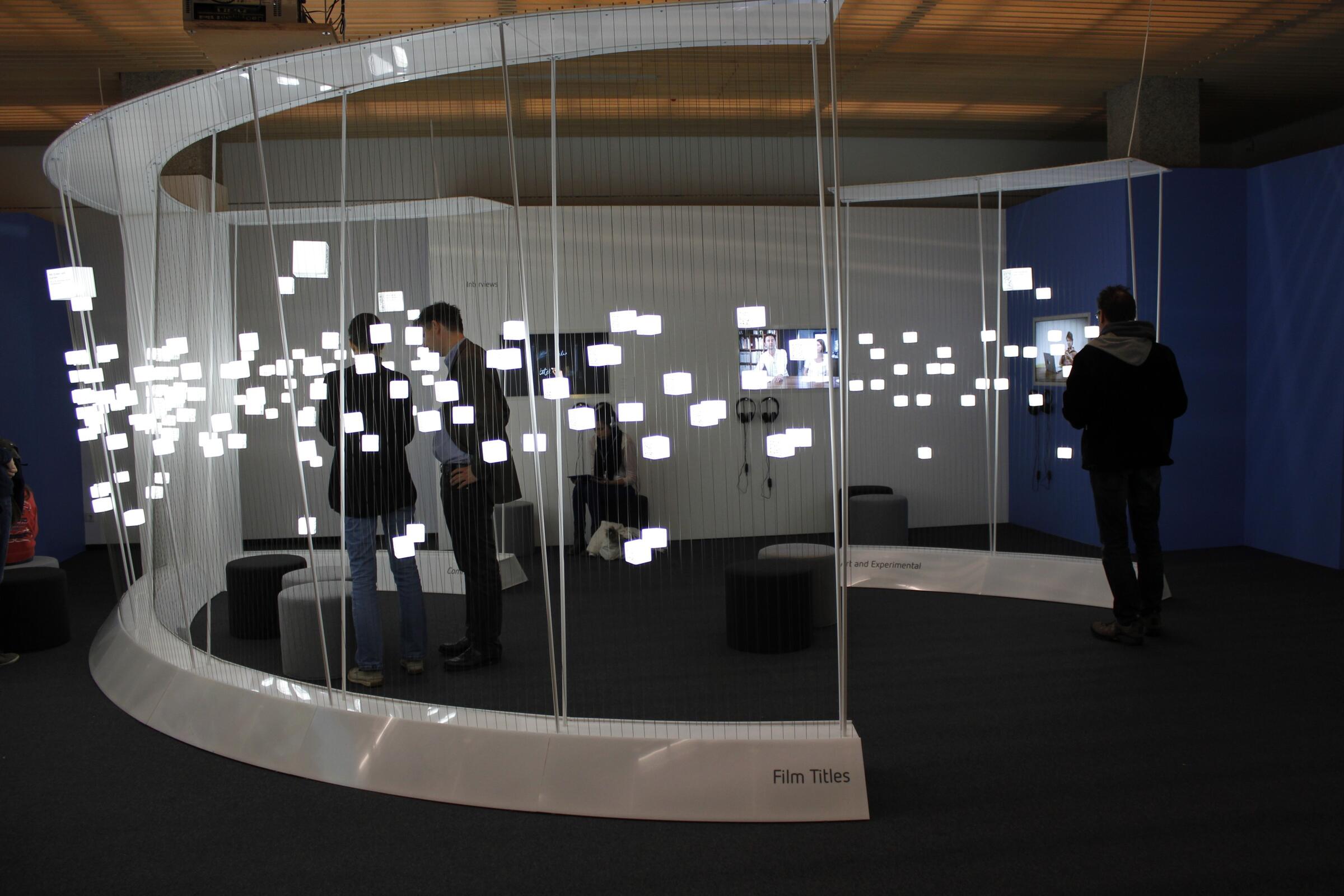
Moving Types · Exhibition and app
Nothing played on the walls.
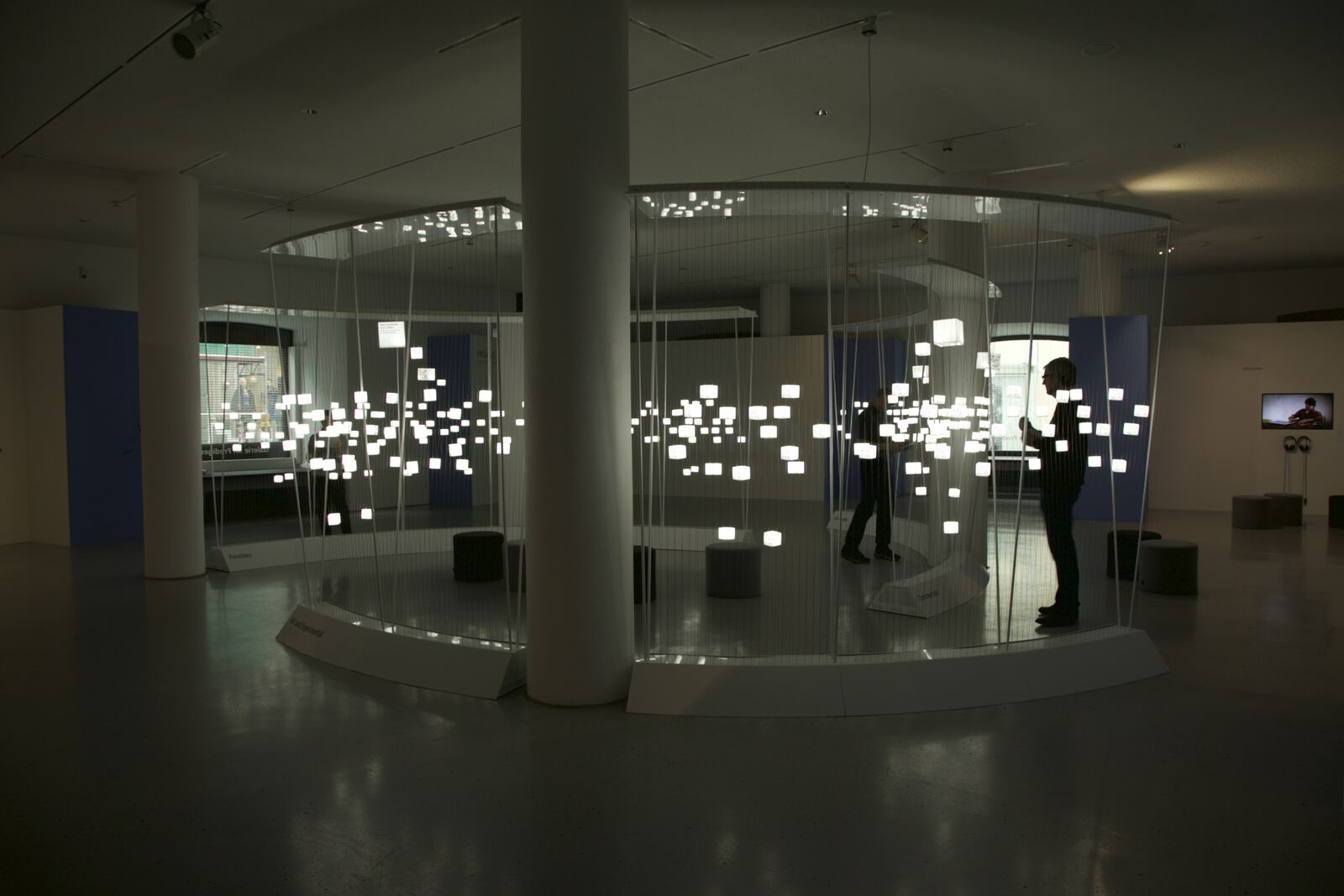
An exhibition on a century of animated type at the Gutenberg-Museum Mainz: around 300 glowing cubes, each holding a film that only started on the iPad in your hands.
- Role
- Spokesperson of the interaction design group · app concept and design
- Timeframe
- 2011–2016 · app 2011–ongoing
- Context
- HfG study project for the z zg and the Gutenberg-Museum Mainz
- Status
- Five venues, three design awards · App 3.0 live since September 2026
Media lounge, Mainz 2011 · Photo: Birgitta Loehr
01 / Starting point
How do you show 300 films in one room?
Ralf Dringenberg and Anja Stöffler had spent years building an archive of animated type, from early film titles to TV idents and music videos, and had interviewed the designers behind them. For ‘Mainz – City of Science 2011’ the archive was to become an exhibition at the Gutenberg-Museum. There was a single room for it.
When our study project began in the summer of 2011, it was settled that the exhibition would happen, but not what it would look like. Six student groups from HfG Schwäbisch Gmünd and Hochschule Mainz worked that out in one semester, with the opening set for October.
I was in my fourth semester and spokesperson of the interaction design group. We were responsible for the technology, the visitor scenarios and the information architecture. With four fellow students I designed the concept and the screens of the iPad app; the studio metaminded developed it. I stayed with the project long after the semester. Its latest chapter is an app I rebuilt myself in 2026.
- Interaction design · HfGTechnology, scenarios, information architecture, app
- Communication design · HfGIdentity, catalogue, website, façade content
- Interior architecture · MainzThe object in the room, light, construction
- Media design · MainzInterviews, research, workshops
- Computer science · MainzBlog, IT, technical support for the app
- Communication planning · HfGFilm data and selection
02 / Cube field
Movable type became moving type.
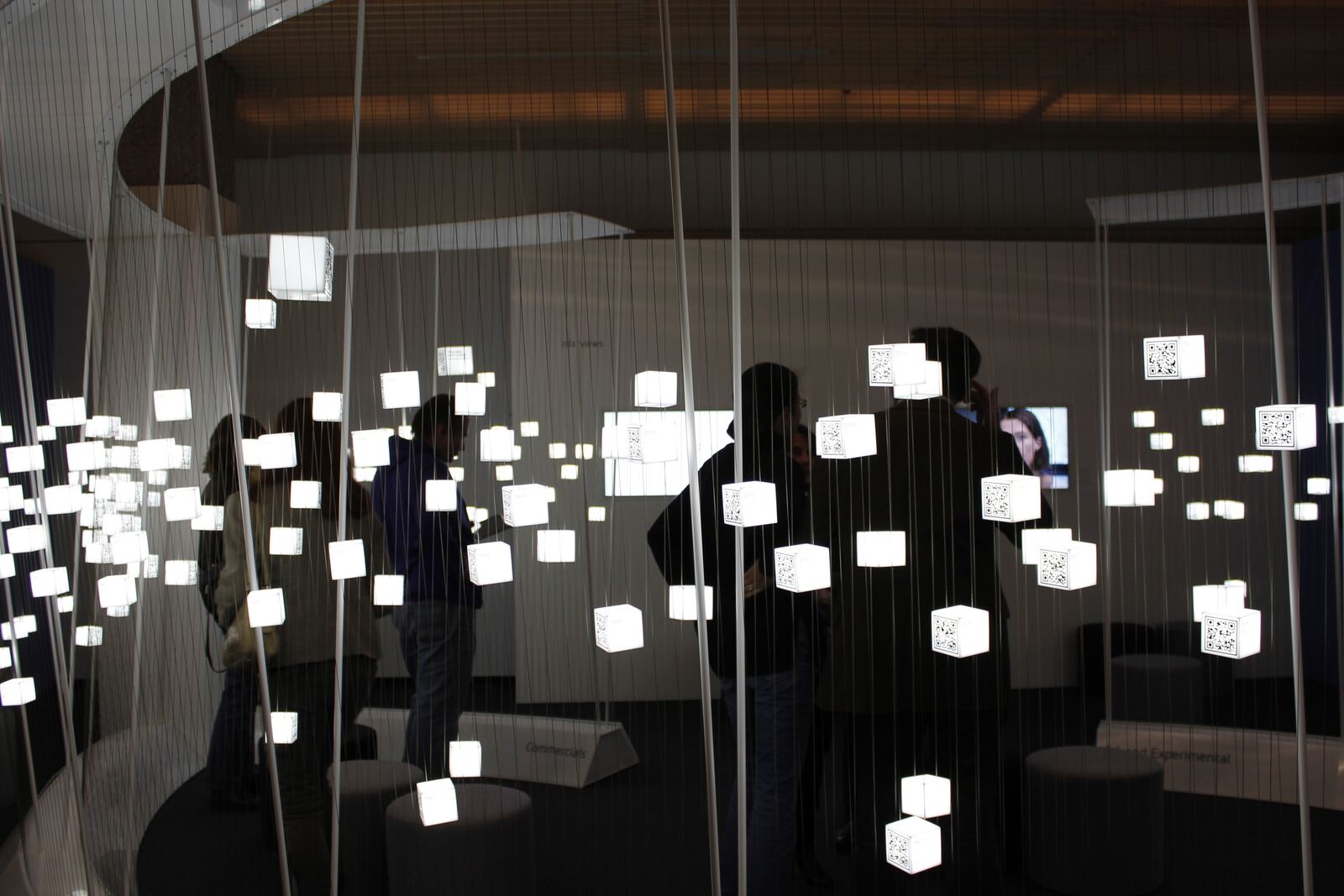
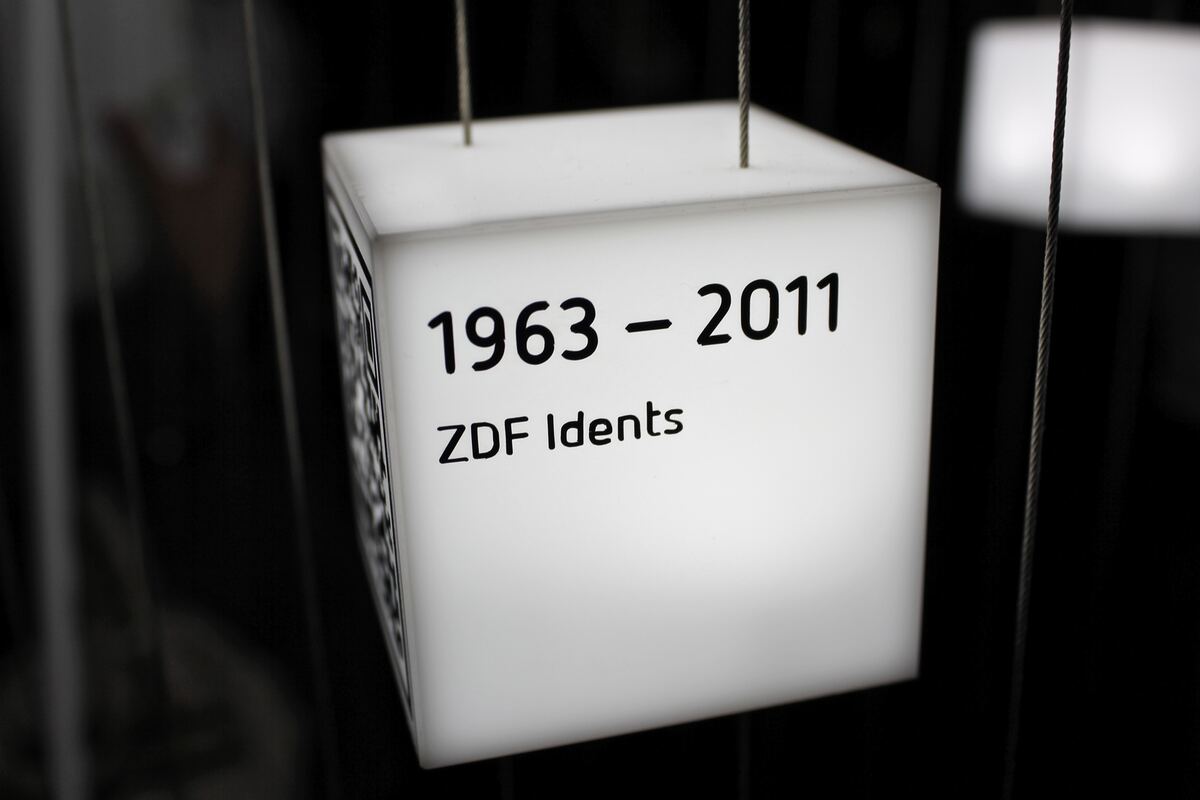
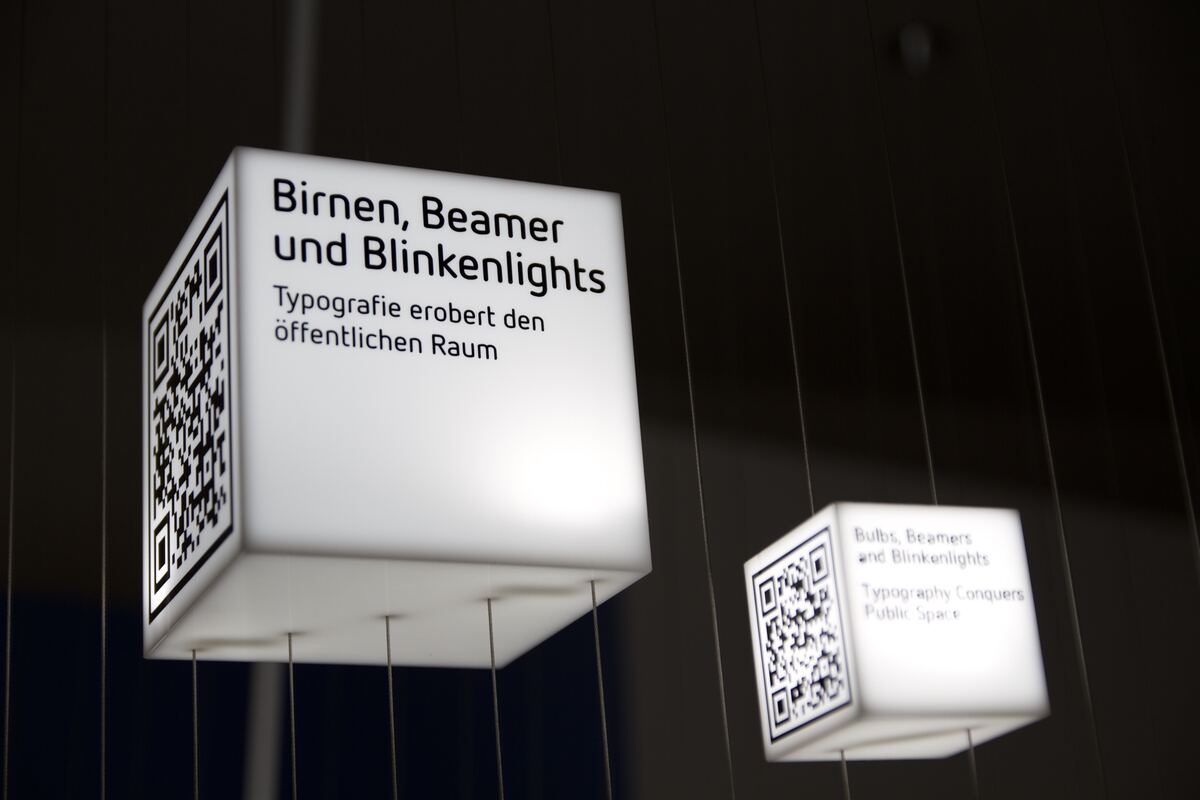
Gutenberg’s letters could be set in any order. The exhibition treated films the same way: around 300 small white cubes hung on tensioned wires, each printed with a QR code. Nothing played on the walls. The cube field was the index, the iPad the projector: visitors scanned a cube with a borrowed iPad, and the film started in their hands.
- Introductory stories
On large cubes at the top, one per theme.
- The exhibits
Five rows at eye level, in six categories: Art & Experimental, Commercials, Corporate Motion, Film titles, Music videos and Information graphics.
- Children’s films
Their own level below, so children and adults explore side by side.
03 / Visitor journey
The visit continued after people left.
We designed the visit as one thread, from the desk by the entrance to a collection at home. Every loop below comes from our documentary film, shot in Mainz in 2012 by Onofrio Di Franco, Adrian Jehle, Marcel Müller and me. Watch all three and a half minutes on Vimeo ↗
-
Borrow an iPad
Visitors borrowed an iPad at the desk by the entrance, free of charge. The cube field glowed right behind it.
From our documentary film, Mainz 2012. · Original material
-
Scan a cube
Visitors held the iPad up to a cube, and the frame found the code. The film’s title, year and credits appeared.
From our documentary film, Mainz 2012. · Original material
-
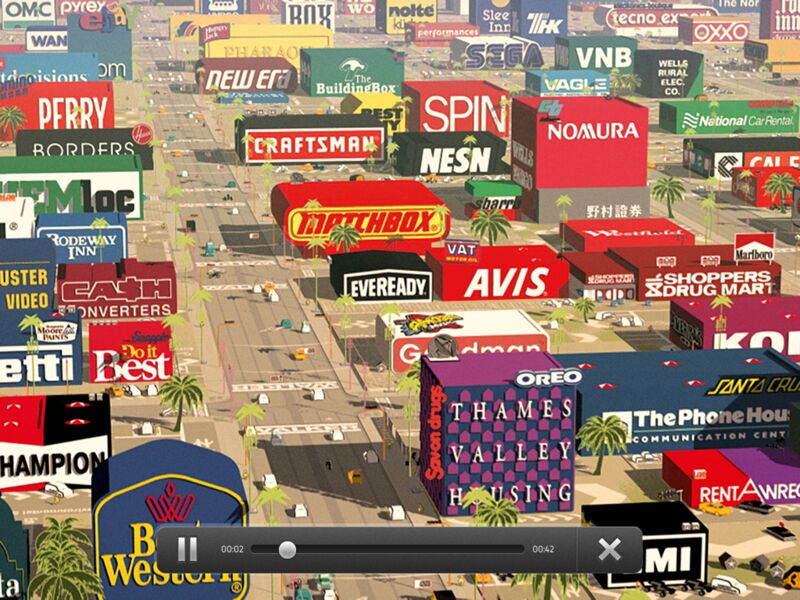
Watch
The film played full screen. Visitors could pause it, rate it, share it or close it and scan the next cube.
The player of the 2011 iPad app, showing ‘Logorama’ (H5, 2009) from the exhibition. · Original material
-
Collect
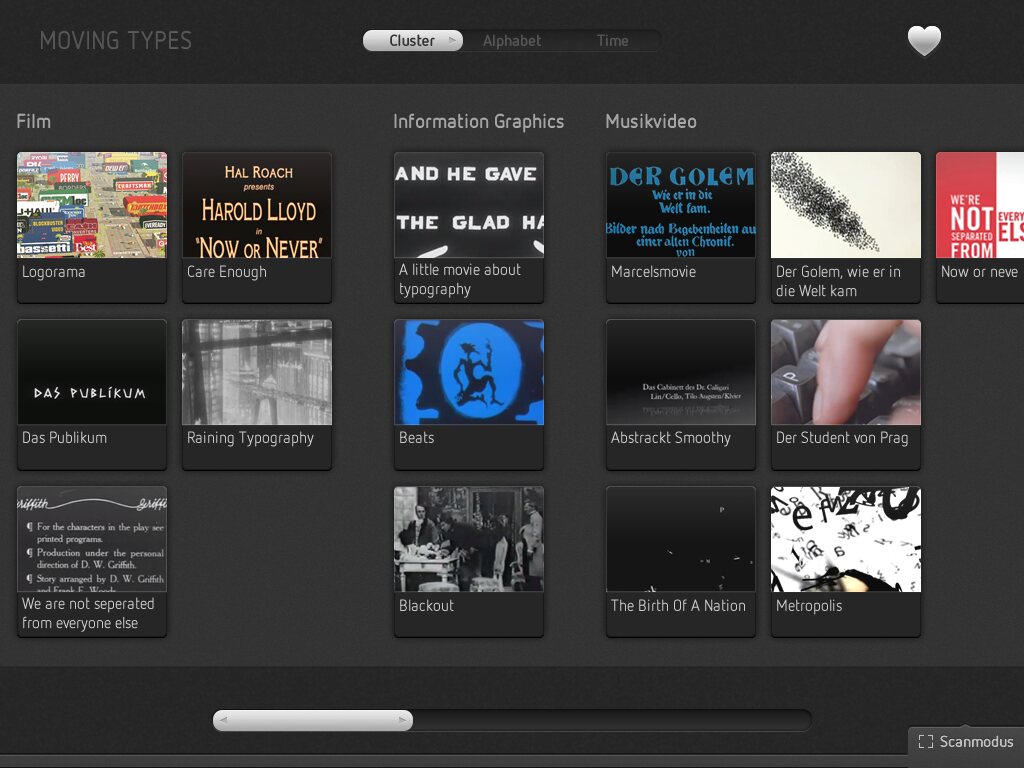
Every scanned film landed in a personal library, sorted by category, alphabet or year.
From our documentary film, Mainz 2012. · Original material
-
Share
At the sharing station, visitors could send their collection to the large projection in the room.
From our documentary film, Mainz 2012. · Original material
-
Take it home
At the end, a label printer produced a personal QR code. At home, the sticker opened the visitor’s collection on the exhibition website.
From our documentary film, Mainz 2012. · Original material
04 / App
Scan, watch, collect: we cut everything else.
We presented four concept rounds to the curators, the other groups and metaminded. The app shrank to three areas: scan mode, player and library.
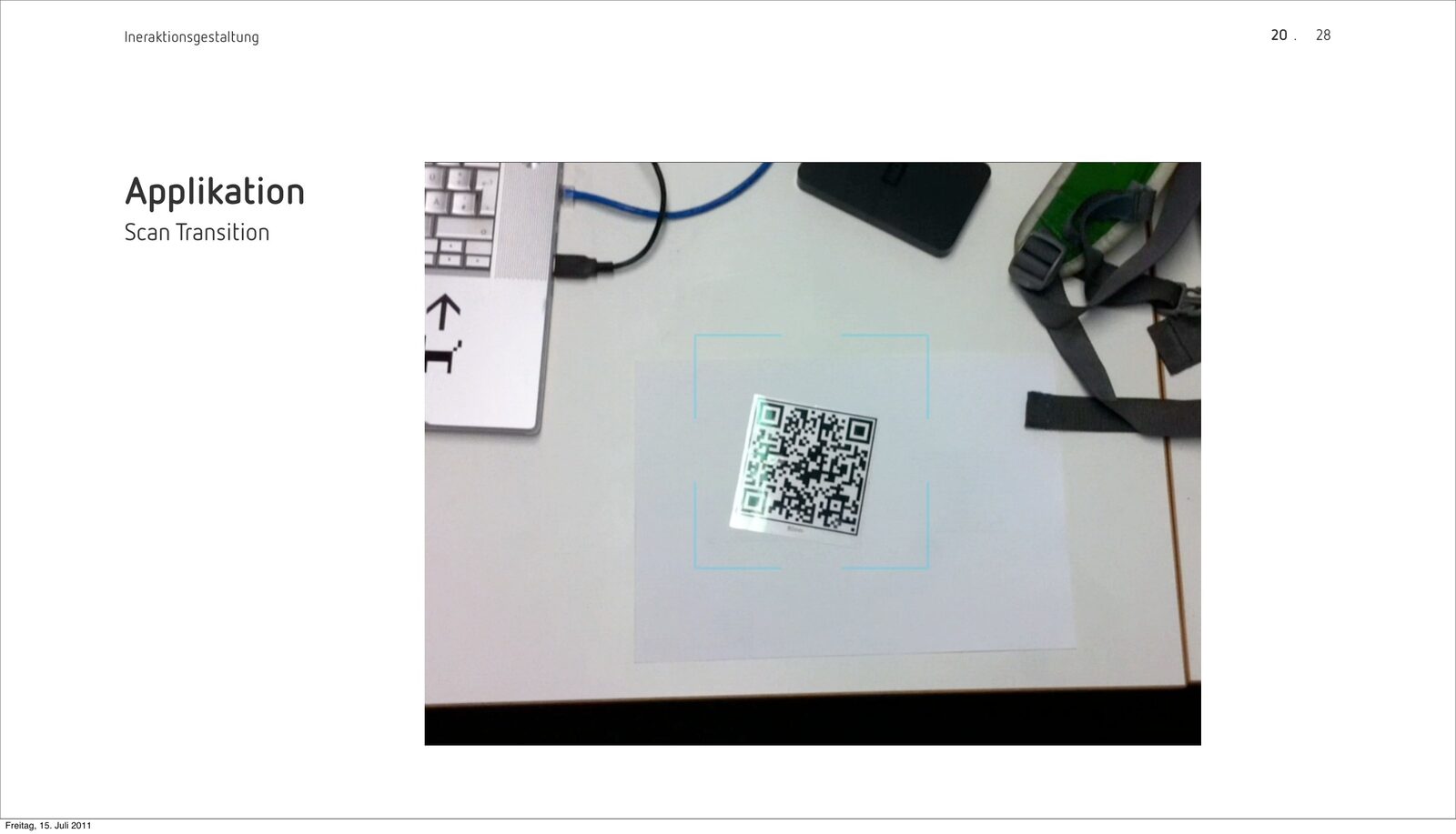
RFID tags would have stayed invisible and could even have located visitors in the room. A QR code needs only a camera, every phone has one, and the code itself shows where a film is. We tested sizes, distances and backlighting until the codes scanned reliably in the dark.
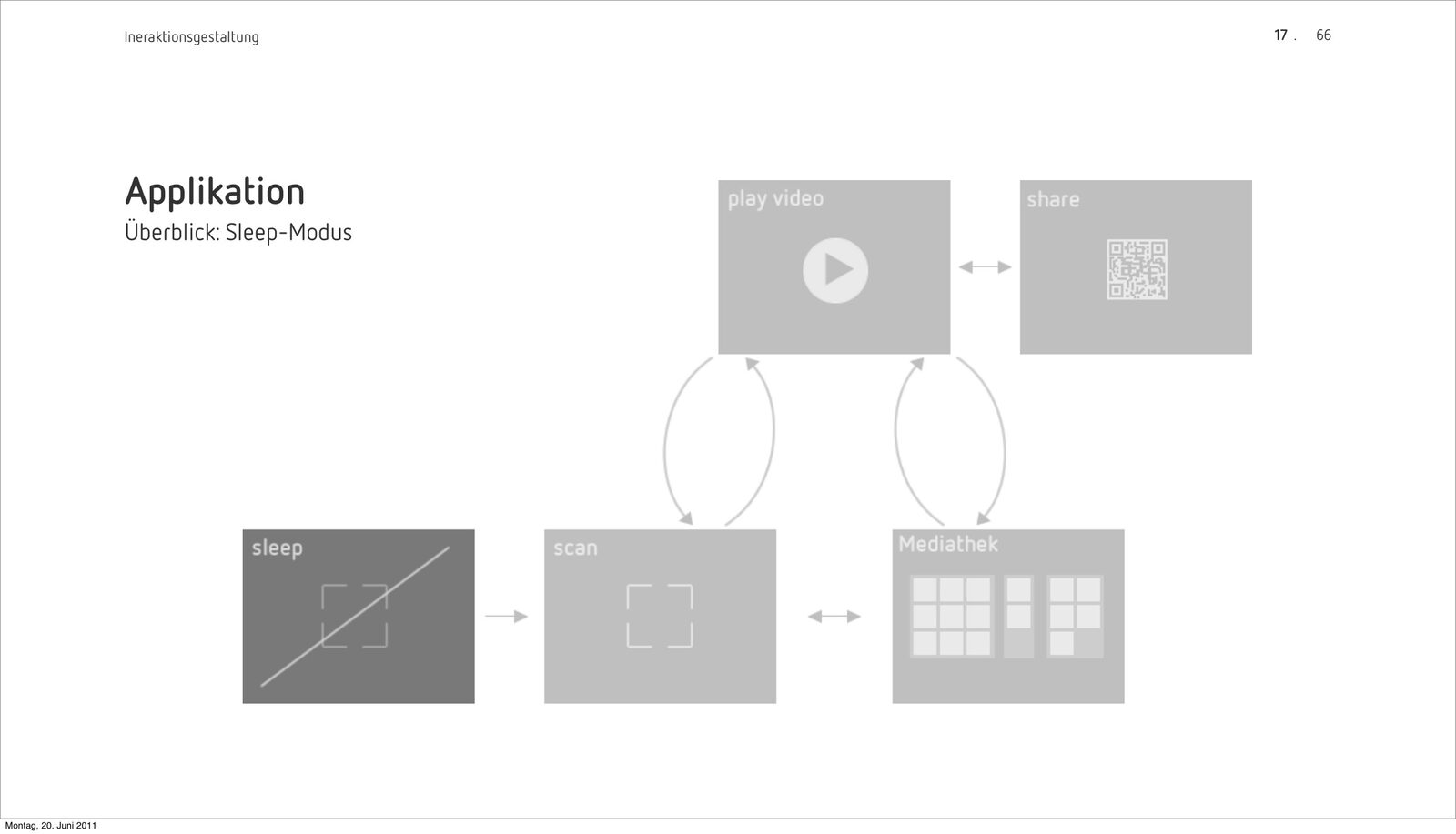
An early concept turned the visit into a game, with tasks, points and a high score. We kept what served every visitor: a personal library and a personal code to take it home. Films were stored on the iPads, so nothing had to load in the room. After 30 seconds without use, the app went to sleep and showed how to start again.
- Scan
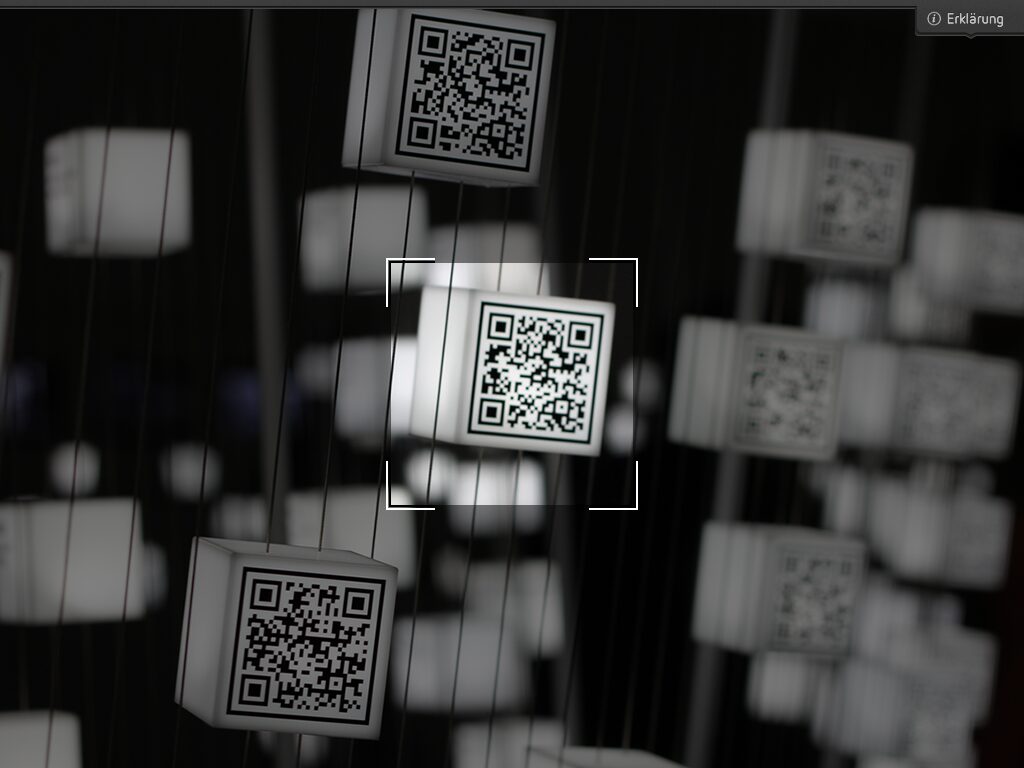
Hold the iPad up to a cube. The frame locks onto its code.
- Watch
The code opens into the film.
- Share
The share button flips the film over to show its own code. Flip it back and keep watching.
05 / Catalogue
The catalogue became a cinema.
The same code works on paper. The catalogue consists almost entirely of QR codes, each illustrated in the style of its film. Scanned with the catalogue app, about 80 films play on the phone.
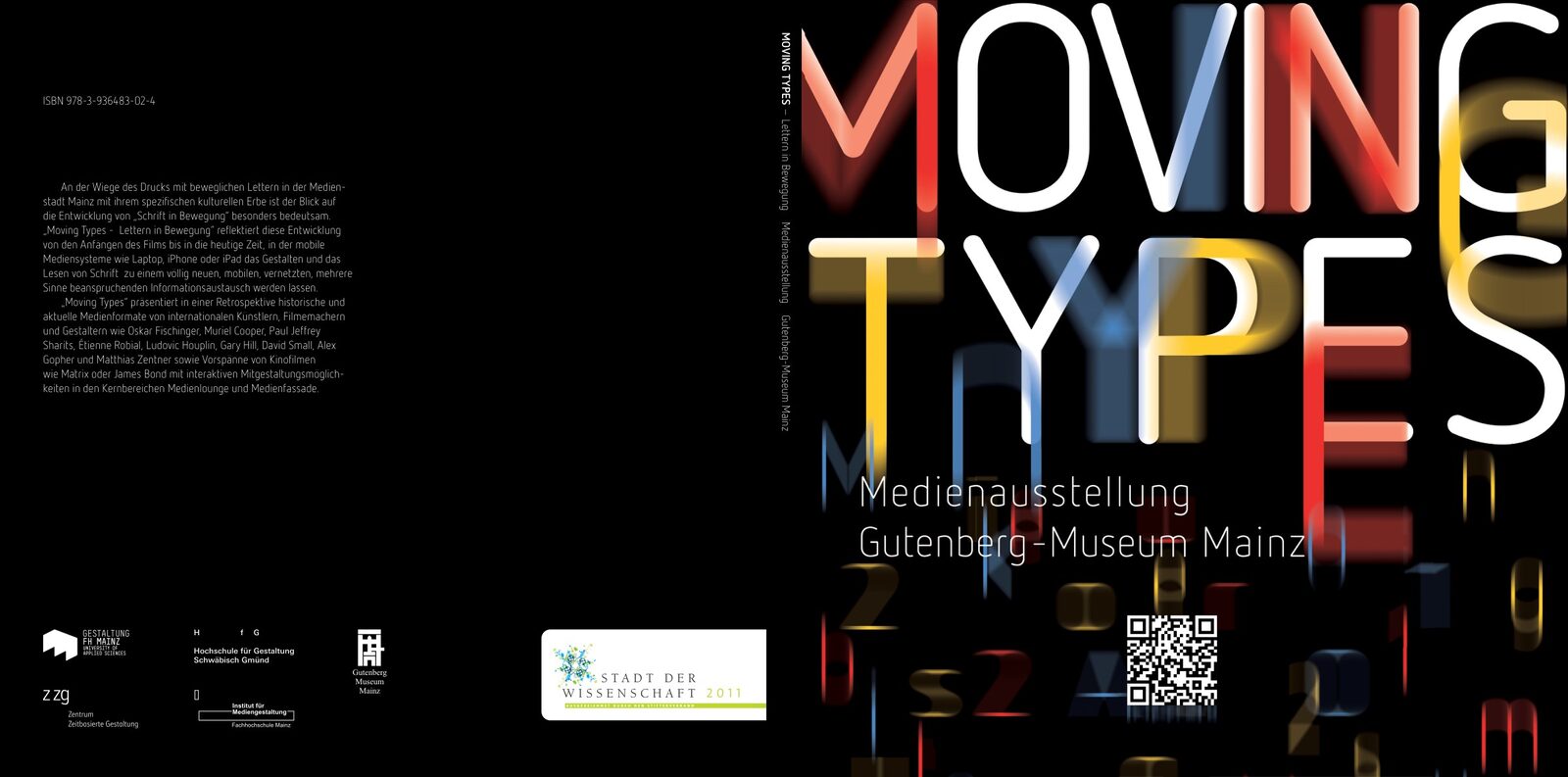
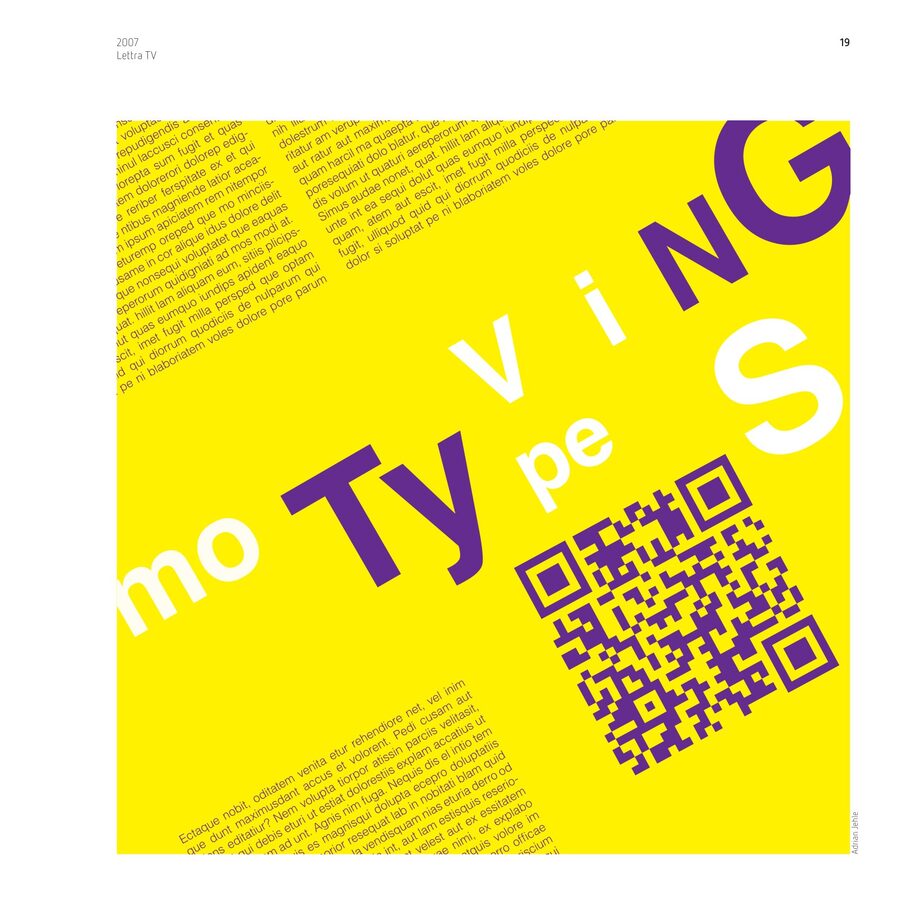
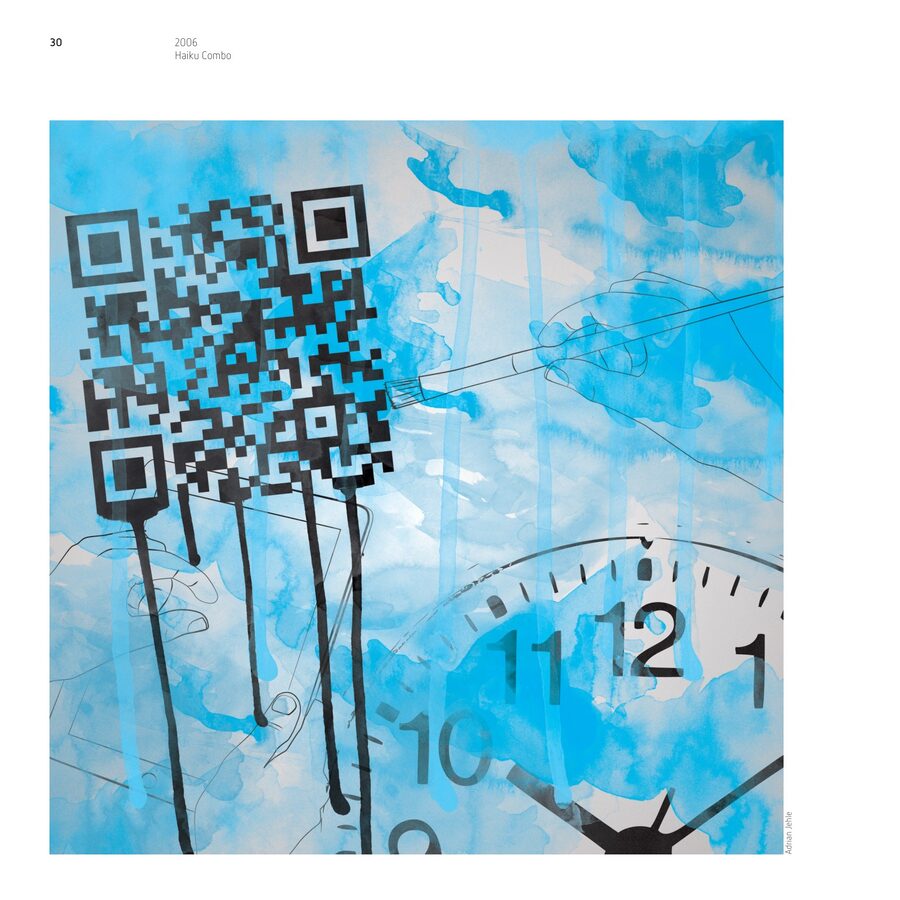
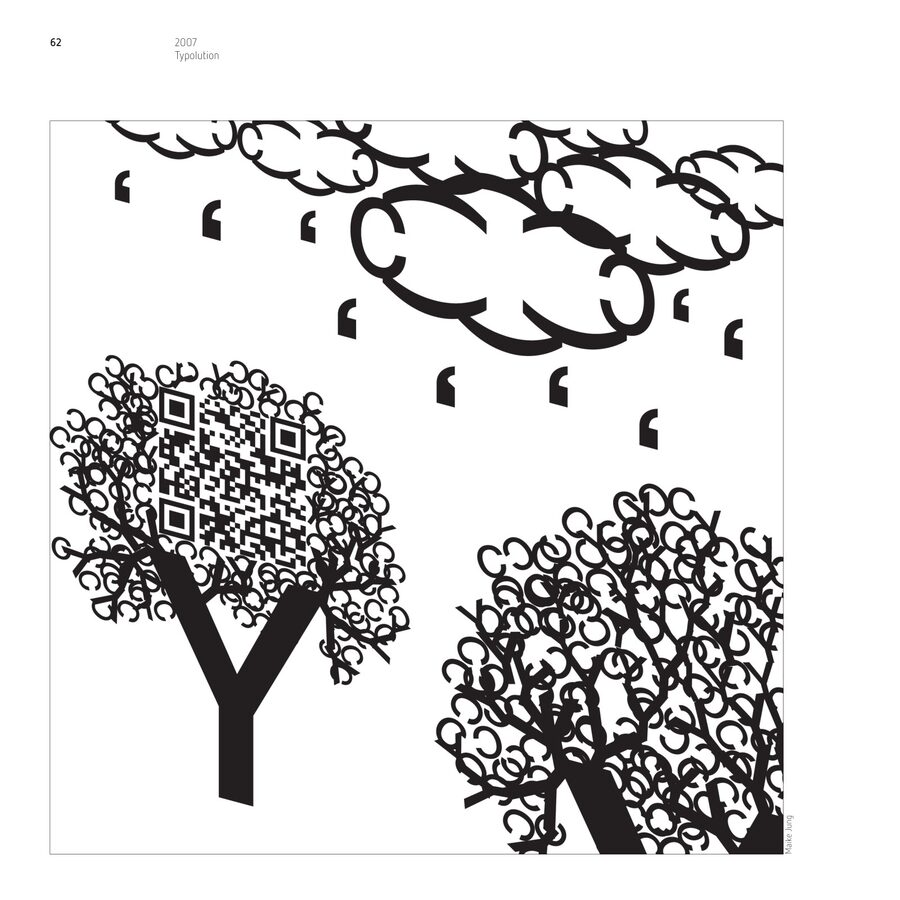
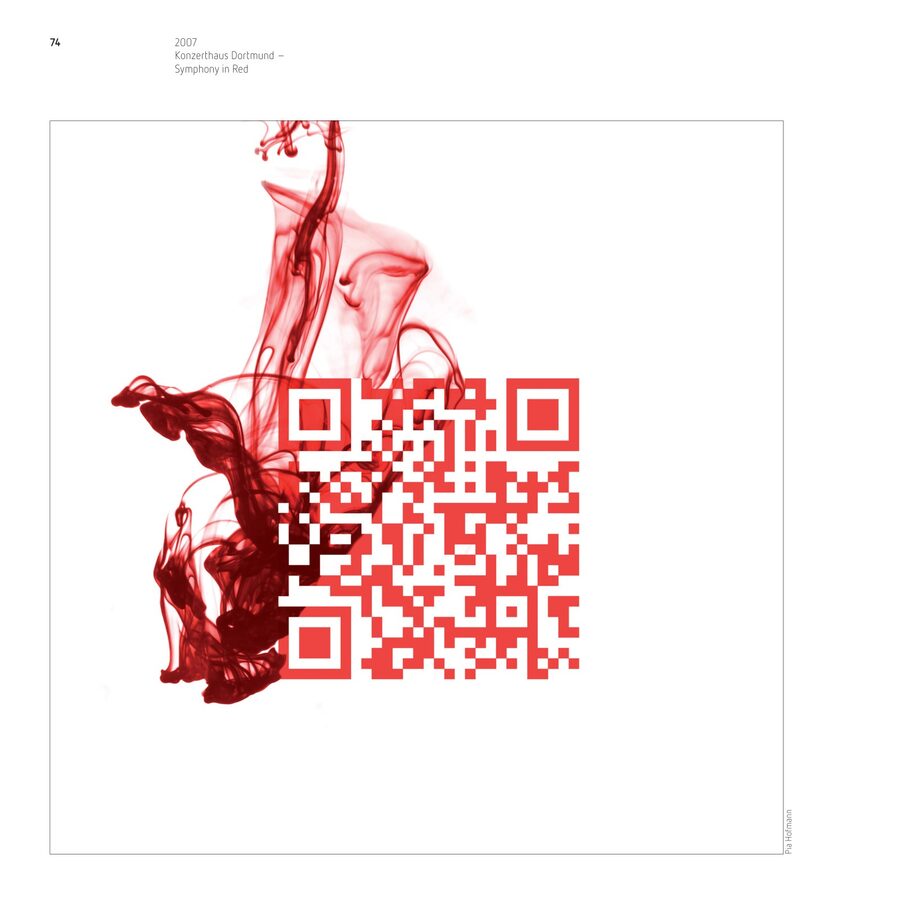
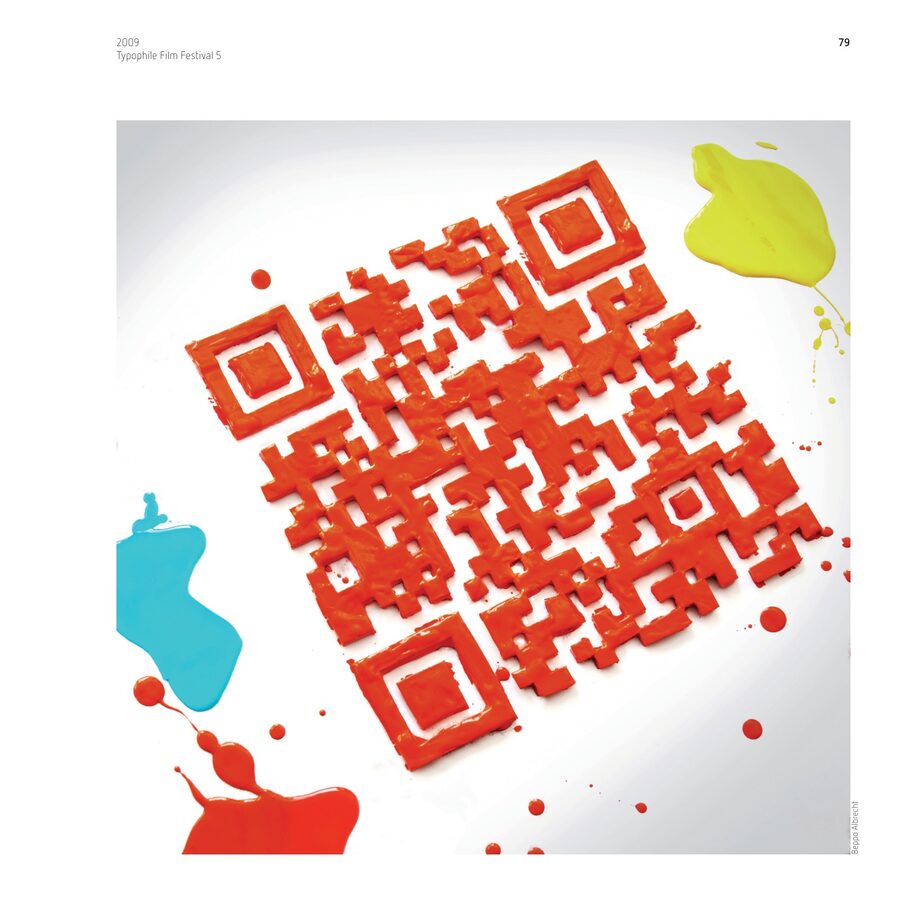
Five of the illustrated codes. Each one still opens its film. · Original material
I was one of seven students who designed the catalogue; the codes themselves were shared out among many more. In its press text, red dot called it one of the first catalogues with a ‘built-in cinema’.
The codes also connected the room with the web. I was part of the team that conceived, designed and built the exhibition website, where each personal QR code opened a visitor’s collection.
06 / Fifteen years
Fifteen years later, the codes still work.
Planned for six months in Mainz, the exhibition stayed almost a year and then travelled. I stayed with it beyond the study project.
- Mainz Gutenberg-Museum
- Schwäbisch Gmünd Galerie im Prediger, 6,000+ visitors
- Dortmund Dortmunder U
- Schwäbisch Gmünd Alte Post, HfG building
- Frankfurt ACHT, ‘Moving Types Light’
Between venues I planned, organised and set up the exhibition with Ralf Dringenberg and Anja Stöffler.
In 2014 I redesigned the iPad app for iOS 7: the same structure, with flat controls and without the textures. metaminded built it from my screens, and I checked their builds against them with correction lists down to the pixel.
The exhibition also wrote on the building.
In Mainz, both venues in Schwäbisch Gmünd and Dortmund, an LED façade carried the exhibition into the street. In Mainz, passers-by could send a text message and watch it run across the bridge between the museum buildings. It kept running for more than a decade. I developed the Mainz façade with Luise Pescheck and Adrian Abele and adapted the later ones with Ralf Dringenberg and Anja Stöffler. That story gets a case study of its own →
Back in the store.
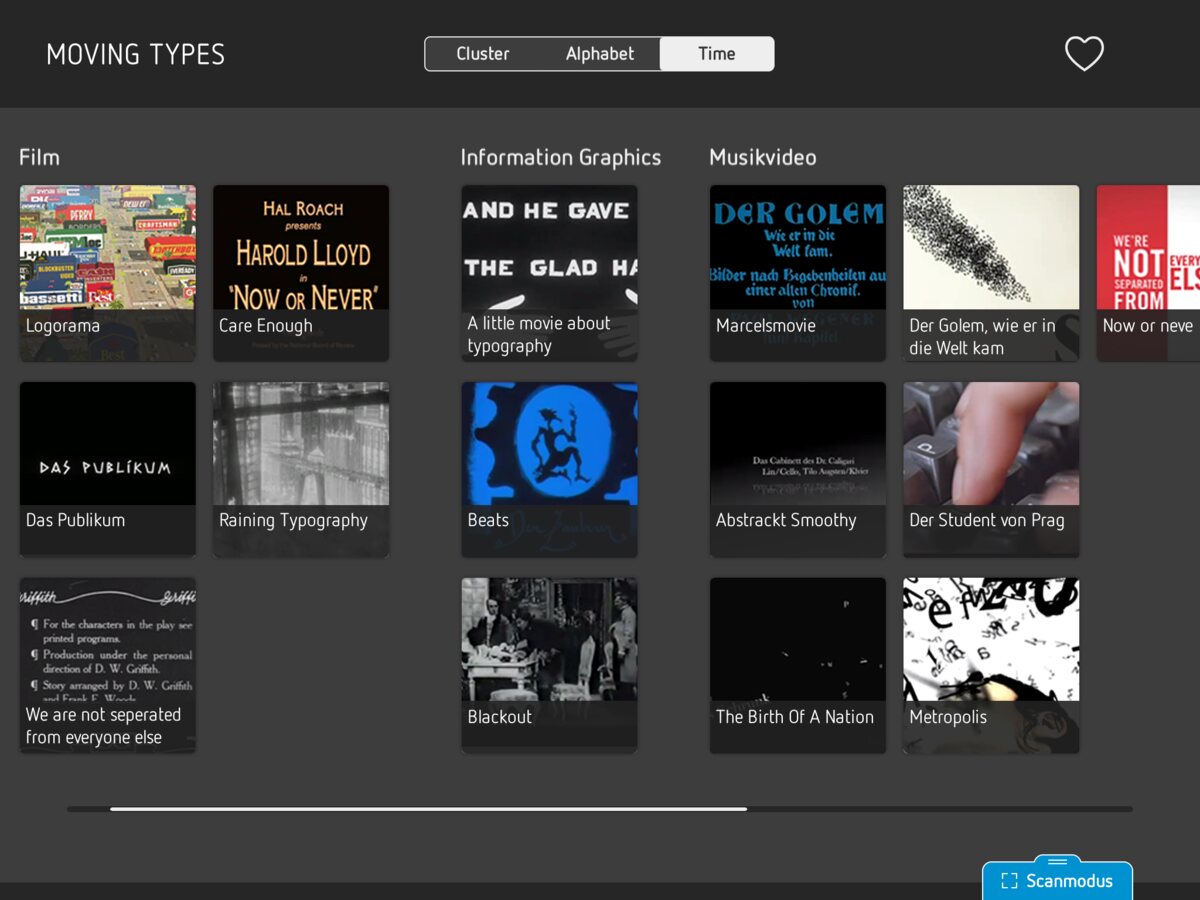
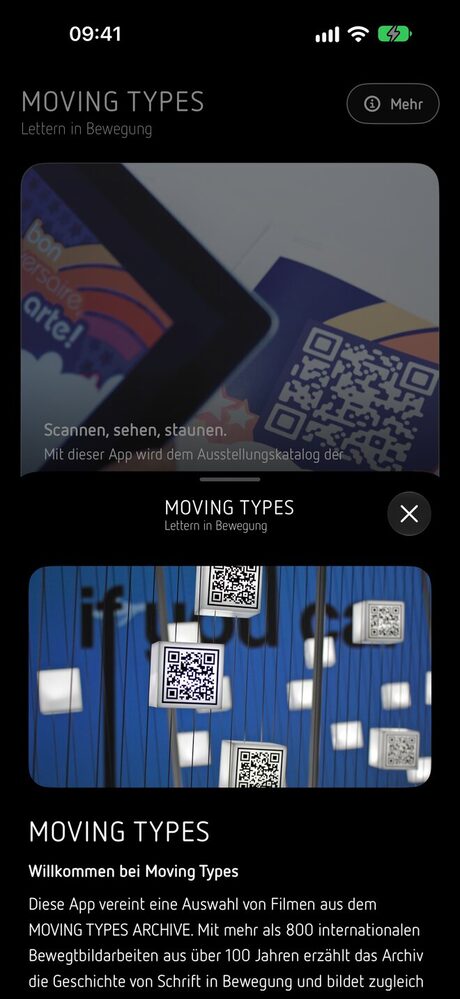
In October 2025 I started rebuilding the app from scratch, design and code, for the z zg. A month later, the previous version disappeared from the App Store, and the catalogues on people’s shelves went quiet. The printed codes had outlived two apps.
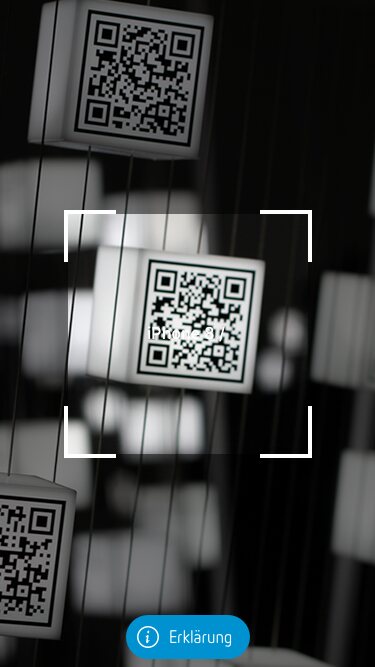
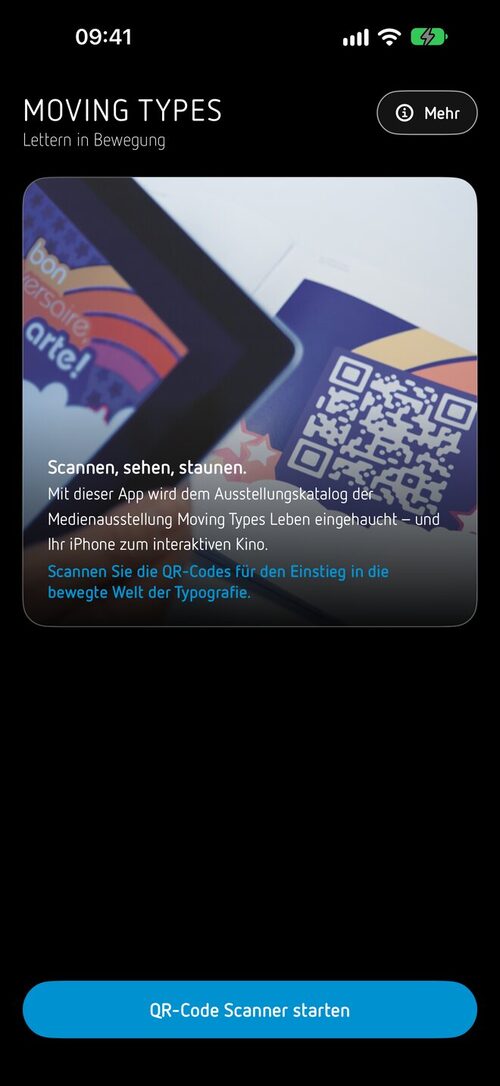
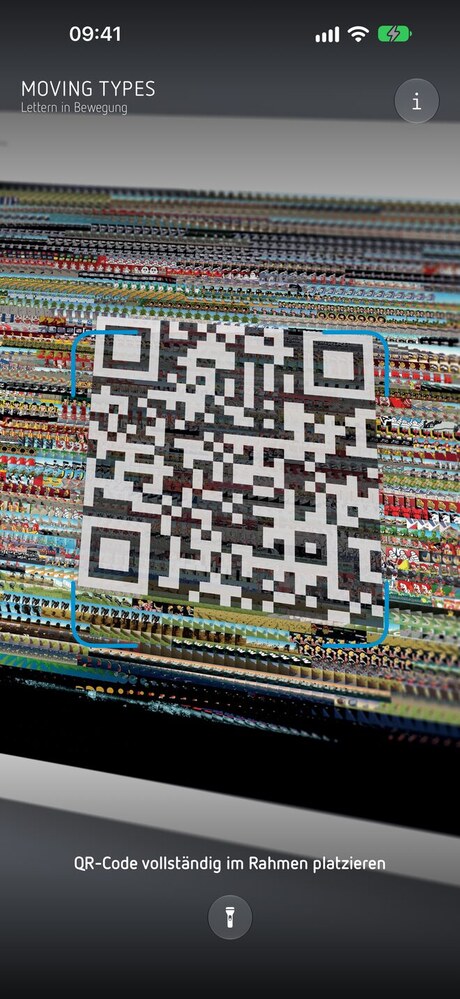
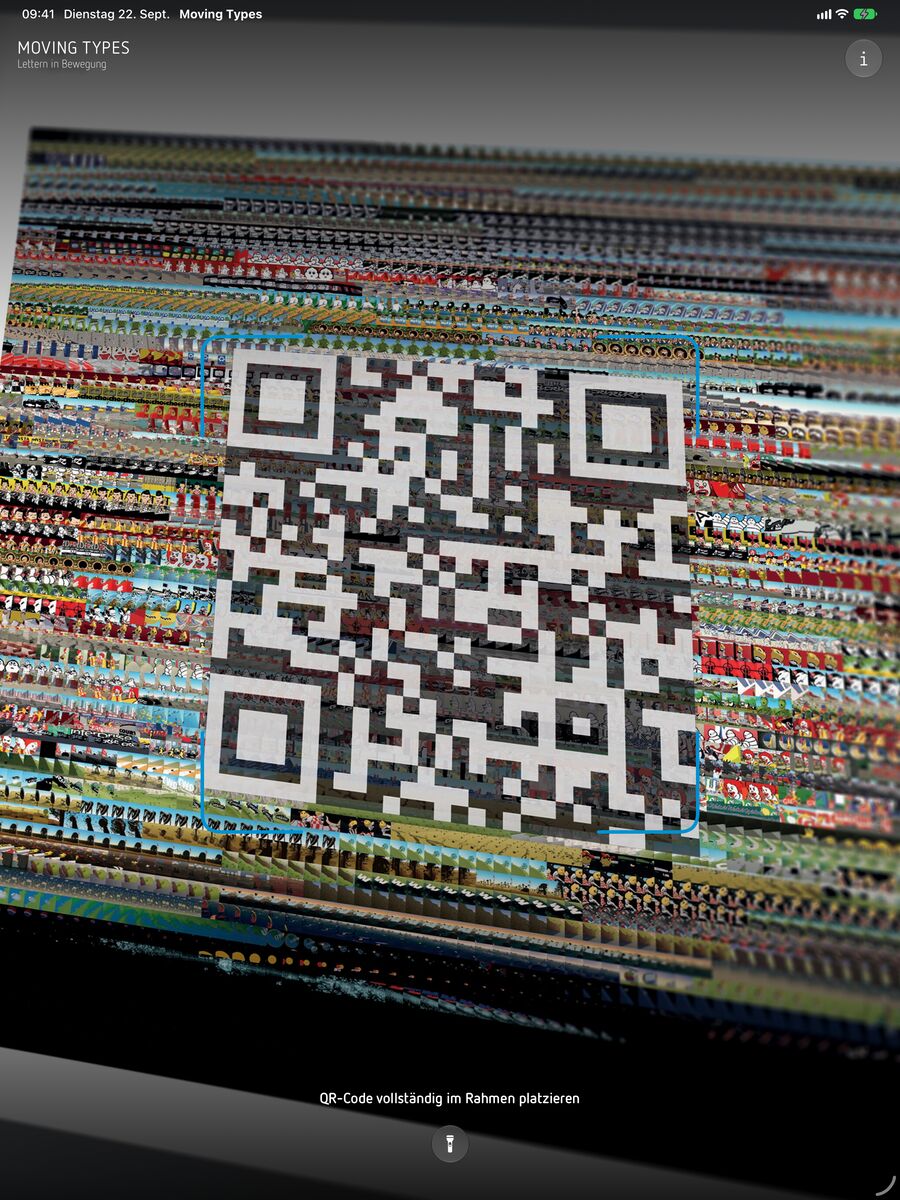
App 3.0 is a native app for iPhone and iPad that also runs on Macs with Apple silicon, an Android version and a web app. Its new scanner is tuned to the illustrated, sometimes inverted codes in the catalogue. Since 20 September 2026 it turns the catalogue into a cinema again: more than 80 works, free, without an account, ads or tracking.
- iPhone and iPad
A native SwiftUI app with onboarding, scanner, player and an introduction to the archive. It also runs on Macs with Apple silicon.
- Android
The same features in Jetpack Compose, with the design adapted to Material Design 3.
- Web
A web app that runs in the browser without installation, so the catalogue no longer depends on a store.
- Scanner
Reads only QR codes and is tuned to the catalogue’s illustrated codes, including the inverted ones.
07 / What remains
A semester project that never quite ended.
Five venues, 2011–2016, with more than 6,000 visitors in Schwäbisch Gmünd alone · red dot 2012, Designpreis Rheinland-Pfalz 2012, iF 2013, German Design Award nomination 2014 · App 3.0 since September 2026: moving-types.de/app ↗
Reflection
The strongest decision was the plainest: a visible code that any camera can read. What I would do differently: plan the app’s upkeep from the start. Once an exhibition closed, nobody was responsible for it, and twice it was lost when iOS moved on.
- Curators
- Prof. Ralf Dringenberg, Prof. Anja Stöffler, Prof. em. Harald Pulch · z zg, Hochschule Mainz and HfG Schwäbisch Gmünd, with the Gutenberg-Museum Mainz
- App 2011
- Dominik Witzke, Onofrio Di Franco, Marcel Müller, Patric Sterrantino, Antonio Krämer Fernandez · development: metaminded
- Catalogue design
- Beppo Albrecht, Miriam Bröckel, Nicole Höfle, Julian Hölzer, Adrian Jehle, Dominik Witzke, Dominic Specht
- Documentary film
- Onofrio Di Franco, Adrian Jehle, Marcel Müller, Dominik Witzke · directed by Ralf Dringenberg and Anja Stöffler
- App 3.0
- Dominik Witzke, design and code, for the z zg
- Team
- With students of HfG Schwäbisch Gmünd and Hochschule Mainz: interaction and communication design, communication planning, interior architecture, media design and computer science
- Photos
- Birgitta Loehr (Mainz, 2011) · Dominik Witzke / Adrian Jehle (Schwäbisch Gmünd, 2012) · film stills from our documentary film
- References
- Documentary film, 2012 ↗ · Moving Types at the z zg ↗