be a Hero · Organ donation communication
The hardest step was making a decision.
A student campaign concept: a game that would open a difficult conversation, then help people carry their own choice into real life.
Explore the case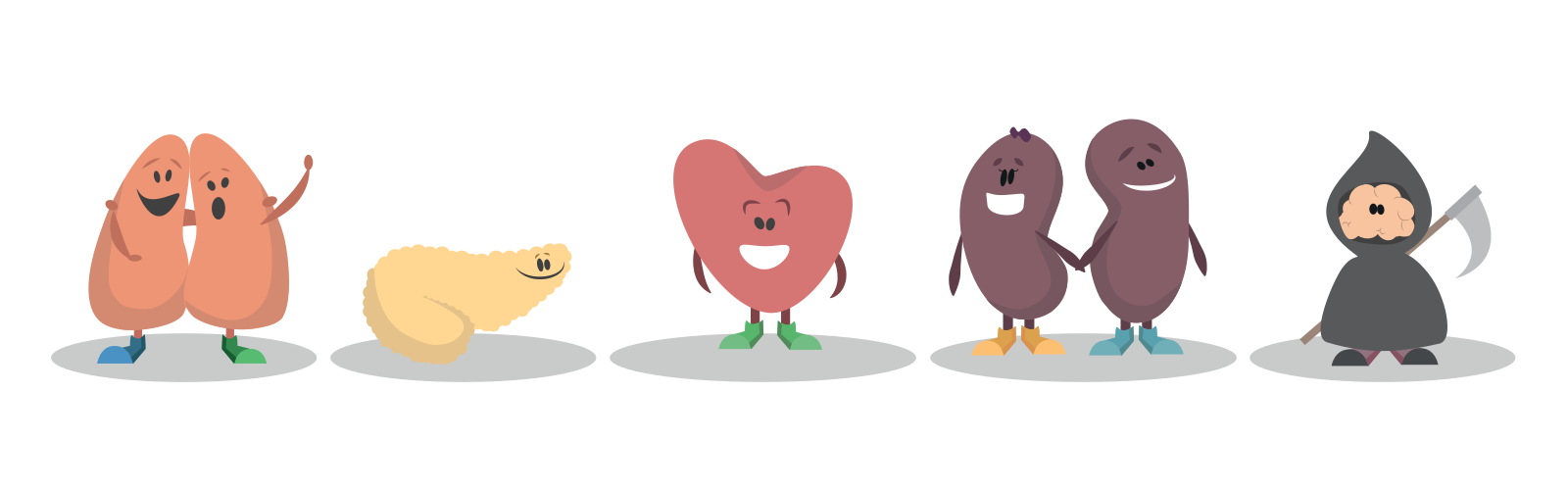
- Role
- Research, strategy and design · shared equally with Martha Miosga
- Timeframe
- Winter 2013/14
- Context
- Master’s course project, HfG Schwäbisch Gmünd
- Status
- Student campaign concept · not commissioned or launched
01 / Starting point
Willingness did not become a documented choice.
Our documentation was titled “Organ donation in crisis”. After the transplant scandals of 2012, donor numbers in Germany had fallen by 12.6% to 1,046, according to the German Organ Transplantation Foundation (Deutsche Stiftung Organtransplantation, DSO). The survey figures we reviewed showed a further gap: many people said they were open to organ donation, yet far fewer carried a donor card. The communication problem was not simply a lack of awareness. People had to confront an uncomfortable subject, understand their options and record a decision.
I researched and developed the strategy and visual concept with Martha Miosga; we shared the work across every phase.
About three in four were open to donating
About one in four had a donor card
The design question became: how do you make room for an informed yes or no?
02 / Audience
One message could not meet everyone where they were.
We mapped four concept personas along different stages of decision-making. They were strategic models, not people we interviewed. Each stage suggested a different job for the communication.
- Not yet considered · Franziska, 18–29
Start without pressure. Her first need is a reason to engage. A playful encounter can open the subject before asking for a position: invite curiosity.
- Considering · Lara, teenager
Give uncertainty a place. She has begun to think about donation. The story needs to make room for questions and reliable information, without rushing an answer: make exploration possible.
- Preparing · Benedikt, 18–29
Turn intent into a step. He is ready to decide but has not documented it. A clear path to the donor card matters more than another emotional appeal: make the next action clear.
- Acting · Robin, adult
Support the decision. A choice already exists. The communication should help keep the document accessible and the decision known to others: keep the choice visible.
03 / Direction
The format had to make the first step feel easy.
We worked out four scenarios and rated each one against our four personas. Young adults were the core audience; teenagers and adults were possible extensions.
- City tour
Conversation in person. An information truck could visit schools, universities and city centres. People had to choose to approach it first; reaching those outside formal education was uncertain.
- Concert
Shared energy. A positive event could meet a young audience in a familiar setting. High cost and a single evening left little space for a considered follow-up.
- Interactive film
A strong emotional hook. The viewer could become part of the story. It relied on a costly production and risked shock overshadowing information.
- Smartphone game
An easy first encounter. Short interactions could be revisited and shared on a personal device. The story could introduce information in steps, then lead beyond the game to a donor card.
The playful entry took inspiration from Dumb Ways to Die. We applied that approachable tone to a different aim: helping someone make and document their own organ donation decision.
04 / Game
From a small game to a choice you could hold.
Cheerful organ characters invited a first encounter. The story then changed tone and asked players to consider donation. Its proposed endpoint was a personalised, printed donor card — for a yes or a no.
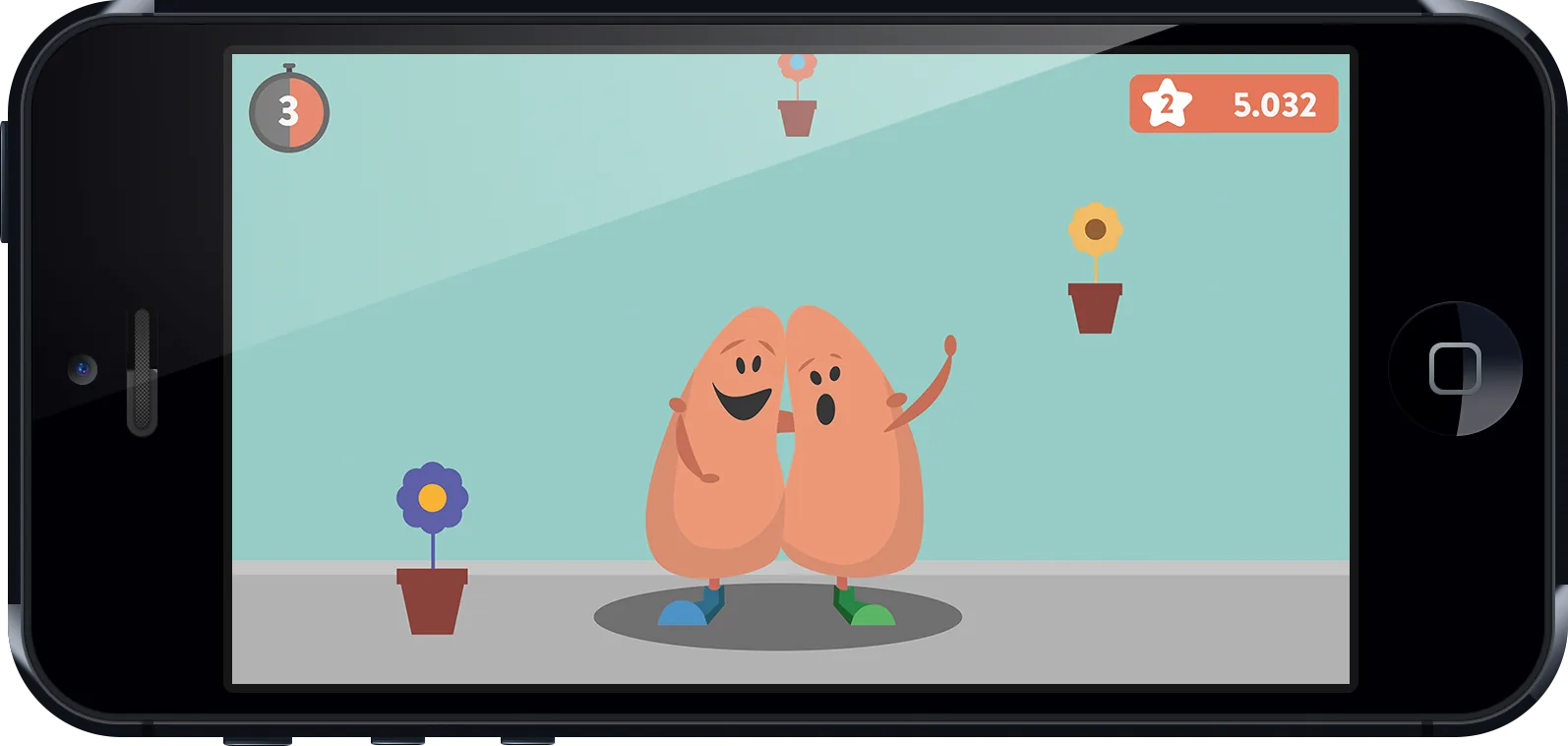
Play before being asked to decide.
A short challenge with the lung character makes room for curiosity before the subject becomes serious.
Game concept, 2014. · Original material
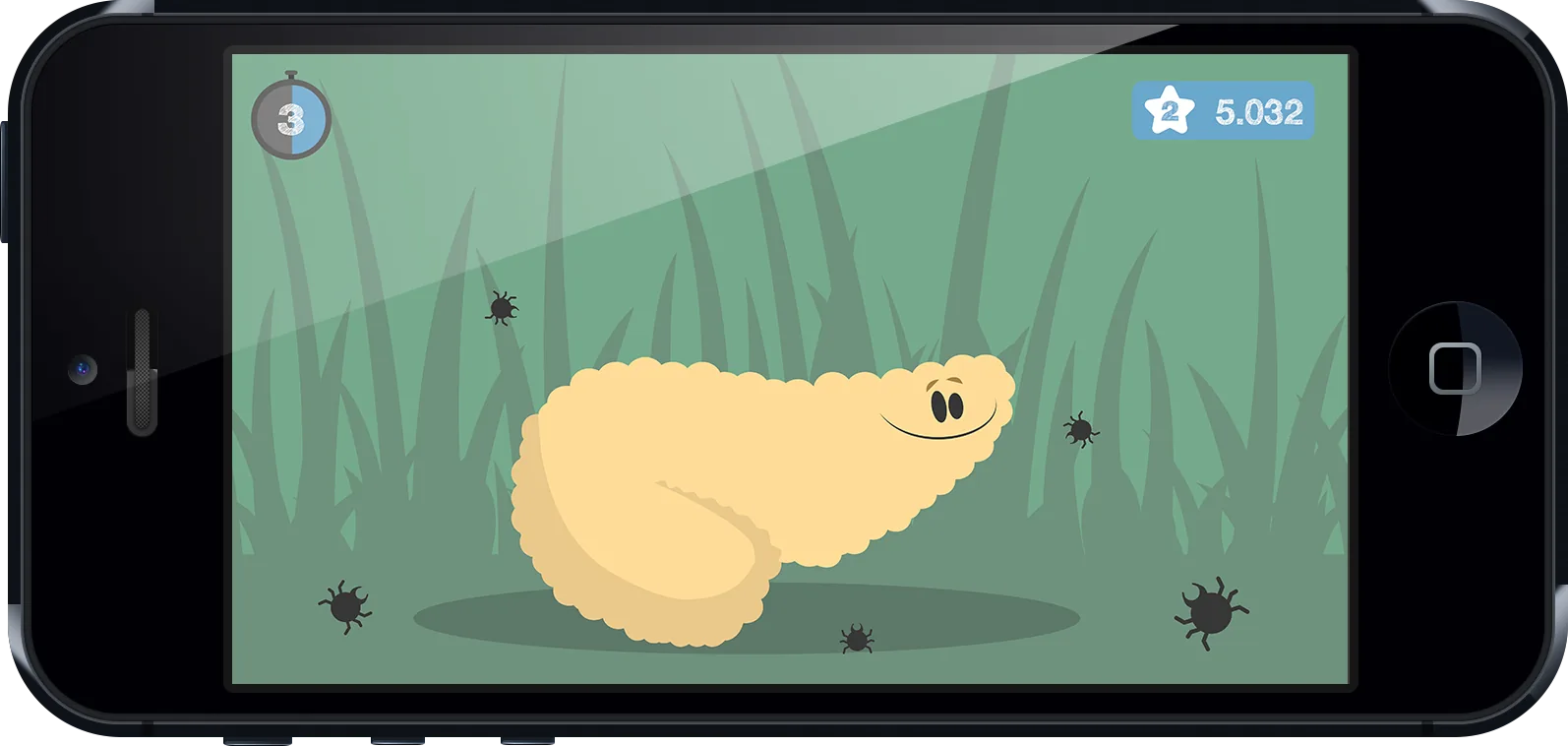
Another character, another challenge.
The repeatable mini-game format could keep the playful world alive long enough for more than one encounter.
Game concept, 2014. · Original material
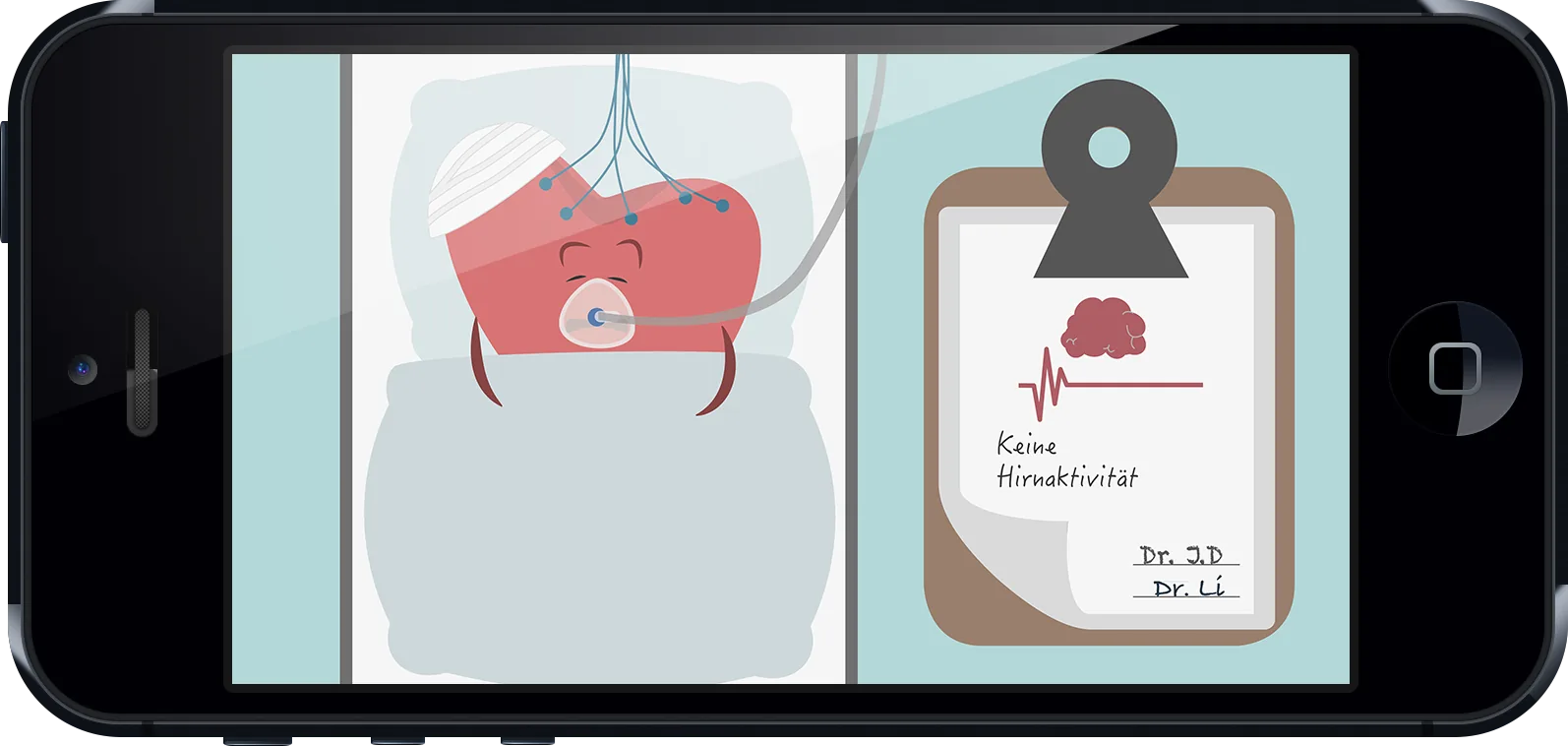
Then the story slows down.
After an accident, two doctors confirm brain death in hospital. A light interaction turns into a moment to understand what donation involves.
Game concept, 2014. · Original material
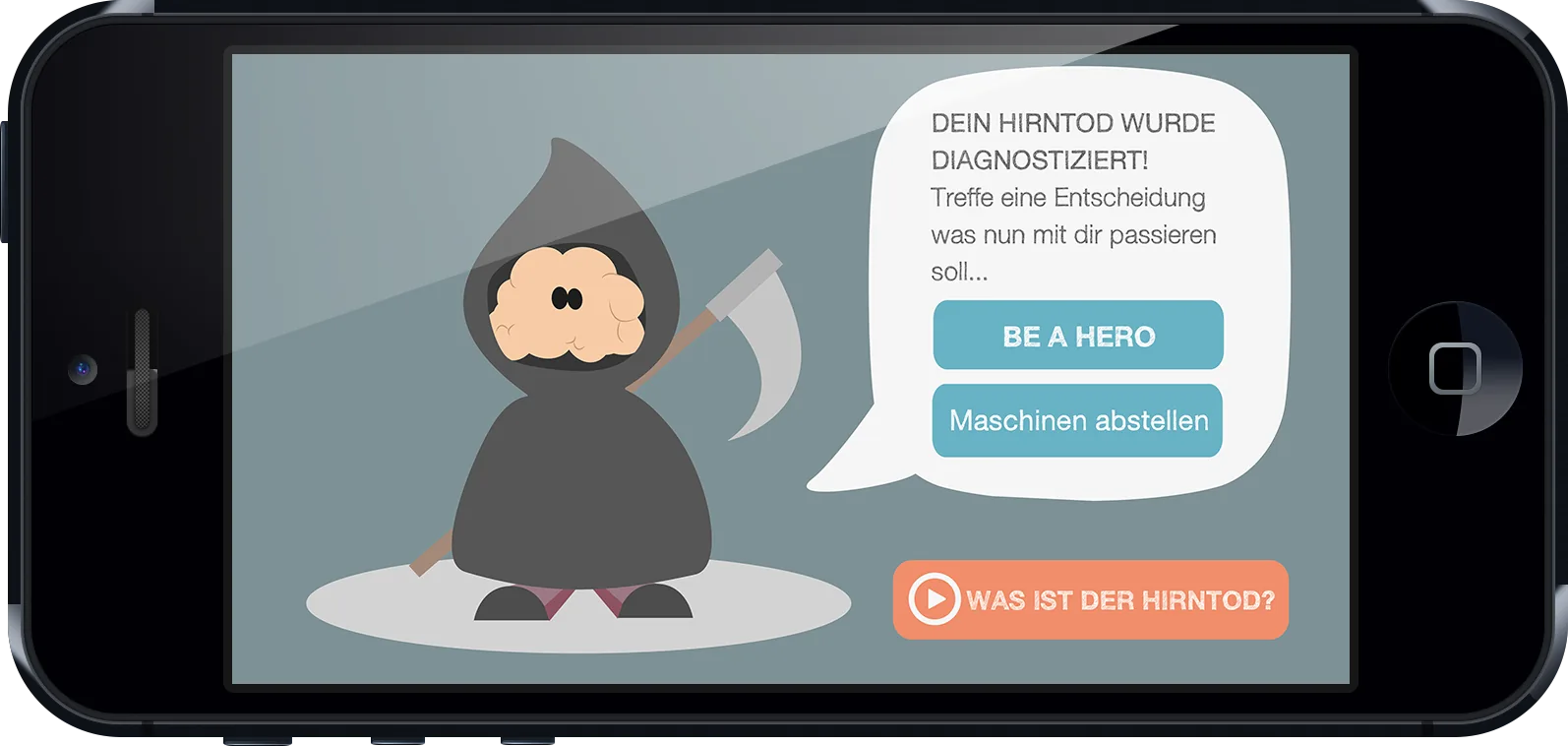
The player meets the decision.
The brain-death character asks the player to decide: ‘be a Hero’ and donate, or switch off the machines. A short film explains what brain death means.
Game concept, 2014. · Original material
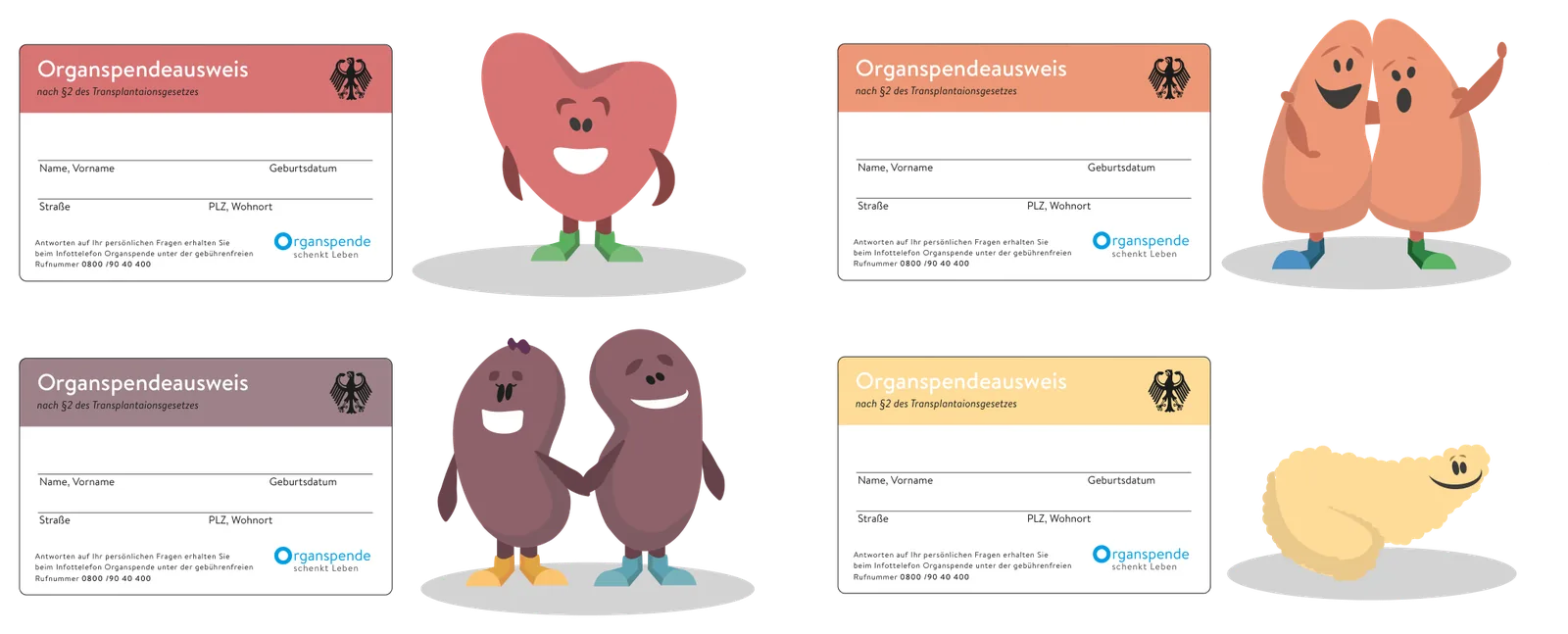
A yes or no becomes tangible.
Unlocking levels and characters earned a personal donor card in a character’s colour. The DSO, as proposed sender, would print and post it; the decision on it, yes or no, stayed the person’s own.
Donor card concepts based on the official German card layout; not an official document. · Original material
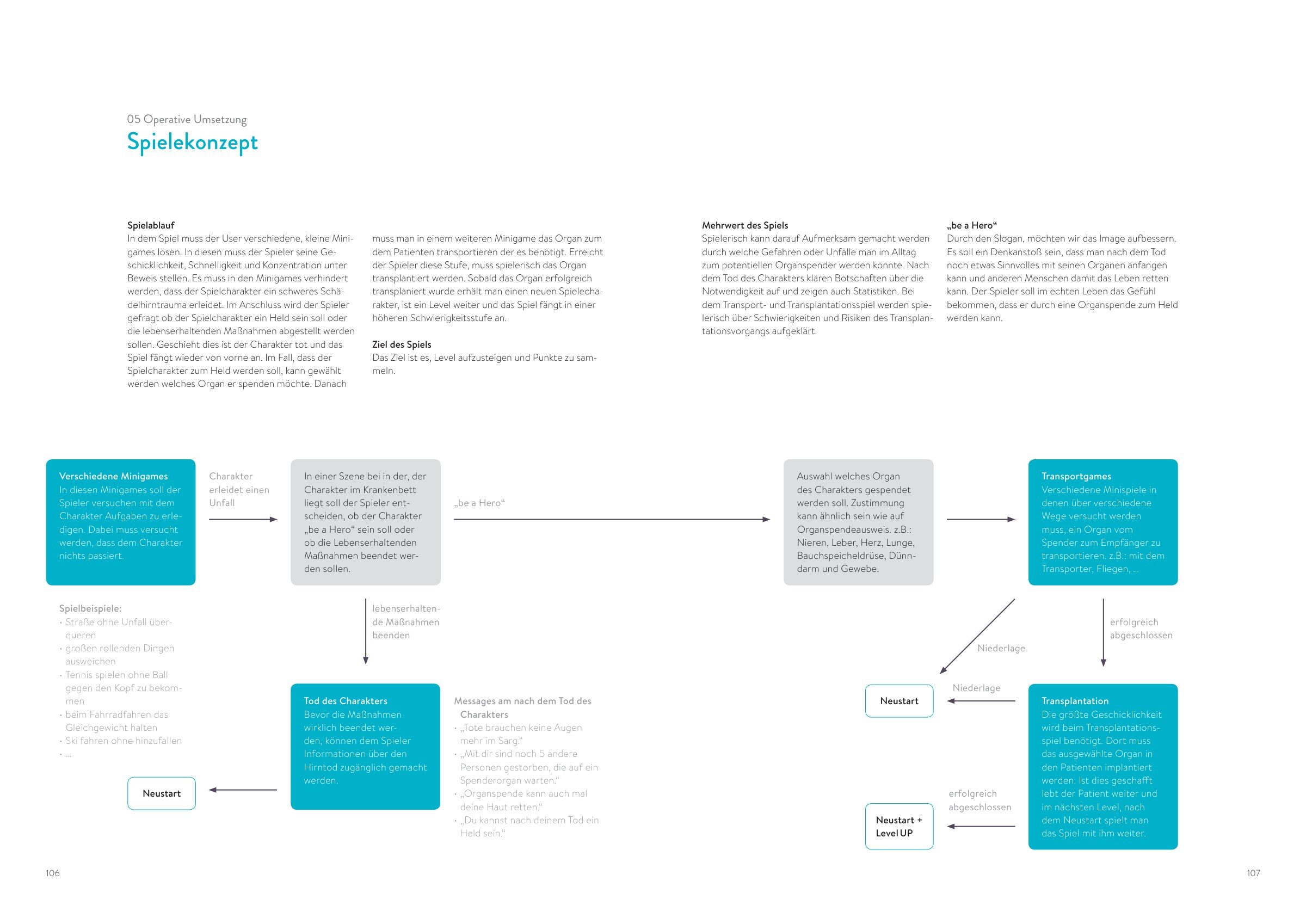
- Mini-games
Short challenges with one character.
- An accident
Two doctors confirm brain death.
- The decision
‘be a Hero’, or switch off the machines, which restarts the game.
- Organ choice
- Transport game
- Transplant game
- Level-up
The recipient becomes the next character.
The original game flow was mapped before the campaign mock-ups. The personalised donor card was the reward unlocked through play.
05 / Campaign
The campaign carried the idea into everyday life.
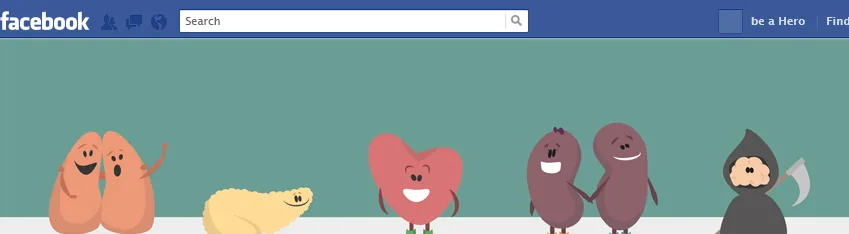
We designed the touchpoints as one path: encounter a character in public, find the game through the microsite, then take a documented decision beyond the phone. A 22-week plan connected character and game production with a microsite, social content, posters and print, followed by updates and evaluation. The mock-ups show the DSO as a proposed sender; the foundation did not commission the concept, and it was never launched.
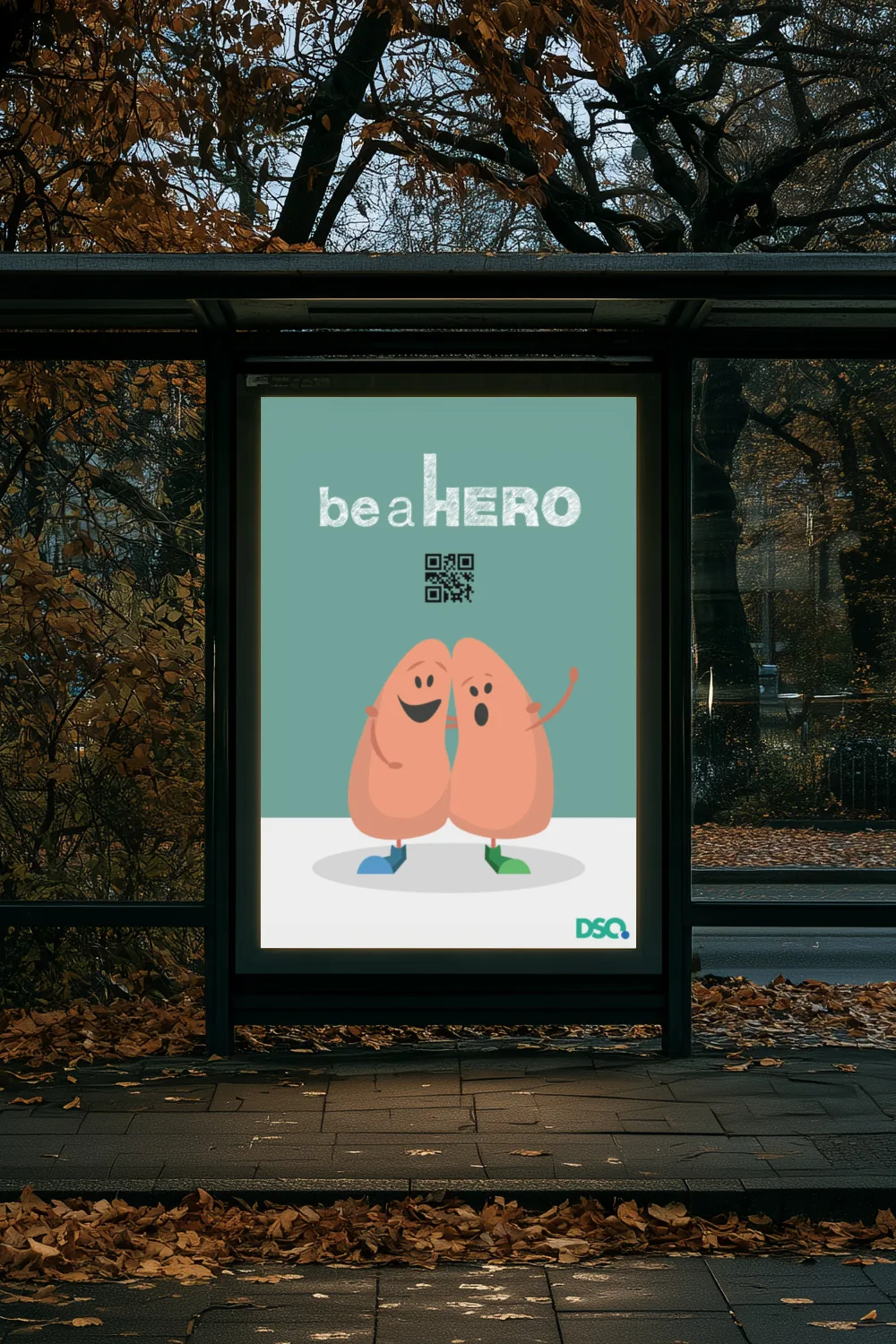
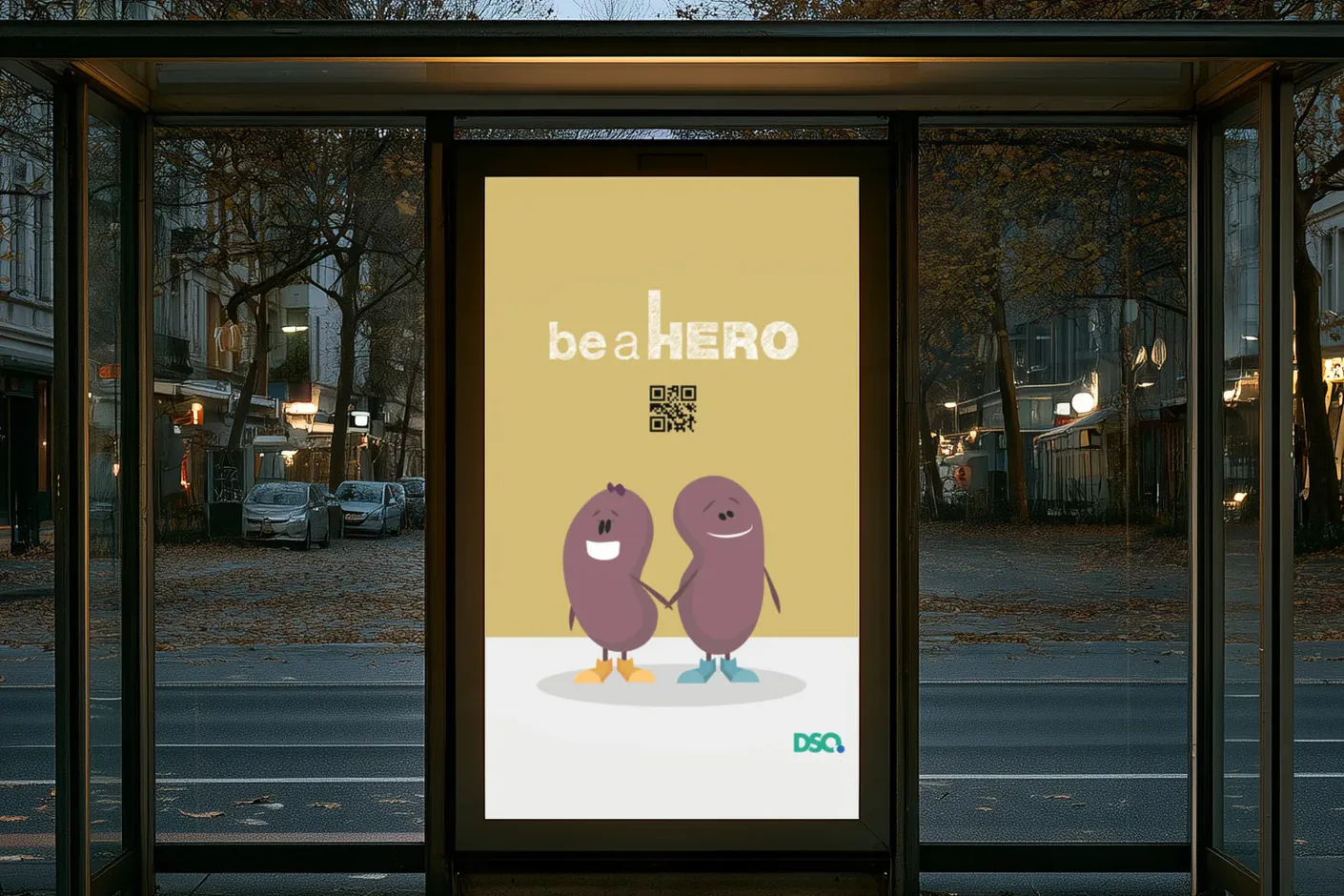
A character appears in the city.
Each poster used one figure, a short line and a QR code. The plan was 30 posters in each of 13 large cities, for ten days. The aim was to create a moment of recognition before asking anyone to engage with the subject in depth.
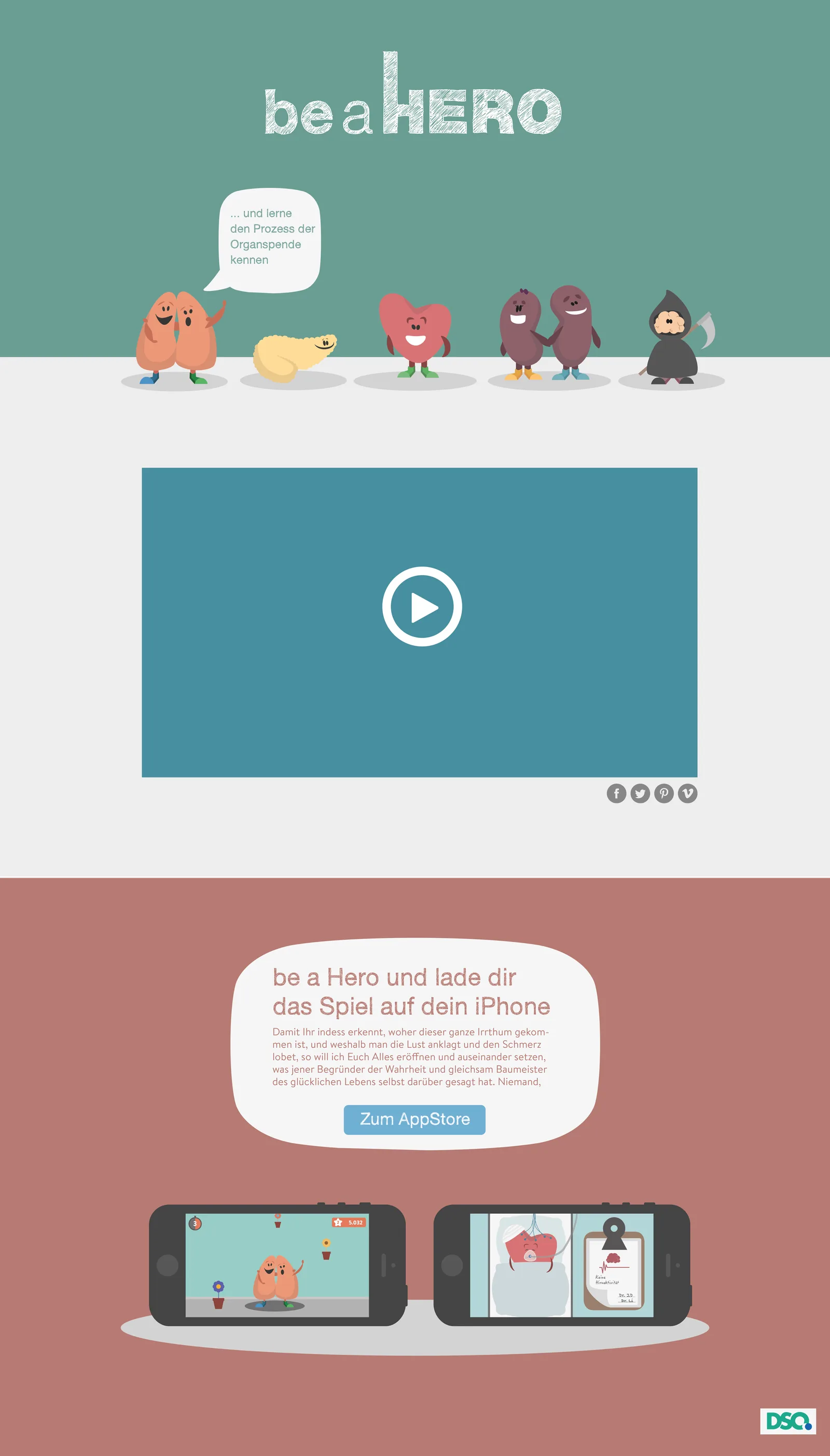
The microsite gives the story somewhere to continue.
The original concept gathered the characters, trailer and game introduction on one page. It connected the quick public encounter to the longer experience shown above.
The decision leaves the screen.
The proposed personal card made the final action concrete. Its character colours kept the campaign recognisable, while the recorded choice belonged entirely to the person — yes or no.
06 / What remains
The concept left a question worth pursuing.
It remained a university project: strategy, characters, game screens, posters, web mock-ups, donor card concepts and a campaign plan, with no DSO commission, launch or measured effect.
Reflection
Approaching younger people through play still seems right to me. What I would do differently: question our favourite as hard as the other routes, because in the game only ‘be a Hero’ moved the story on, although the card was meant for a free yes or no. The question I would keep exploring: how can that first spark lead to a well-informed, freely made yes or no?
- Team
- Martha Miosga and Dominik Witzke · equal roles
- Supervision
- Prof. Ulrich Schendzielorz · HfG Schwäbisch Gmünd
- References
- Project documentation, winter 2013/14 · For current, factual information on organ donation: Federal Institute for Public Health (BIÖG, formerly BZgA), “Organspende: Ja oder Nein?” (in German) ↗